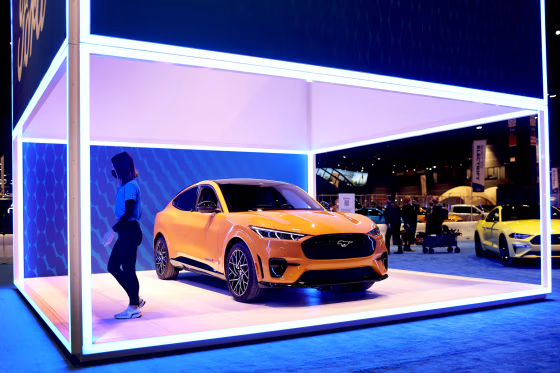
Ford Motor Co said Tuesday it is recalling about 49,000 Mustang Mach-E electric vehicles in the United States because a part could overheat and result in a loss of propulsion power.







 FOR SUBSCRIBERSA harrowing ordeal aboard an Israel-bound plane







FOR SUBSCRIBERSThe debate over AI’s future rages on both coasts

The No. 2 U.S. automaker said DC fast charging and repeated wide-open pedal events can cause the high-voltage battery main contactors to overheat. Ford said it will address the issue that covers Mach-E vehicles built from late May 2020 through late May 2022 with a software update it expects to begin next month.
Dealers cannot deliver new vehicles to customers until the vehicles have the software update.
FOR SUBSCRIBERSA harrowing ordeal aboard an Israel-bound plane
FOR SUBSCRIBERSThe debate over AI’s future rages on both coasts
Ford said “overheating may lead to arcing and deformation of the electrical contact surfaces, which can result in a contactor that remains open or a contactor that welds closed.” If an overheated contactor opens while driving, it could result in a loss of propulsion power, increasing the risk of a crash.
Ford previously issued five recalls for various 2021 Mustang Mach-E vehicles, including calling back nearly 500 for a software issue that could cause unintended acceleration. Those recalls included loose bolts and inadequate windshield and panoramic roof glass bonding.
