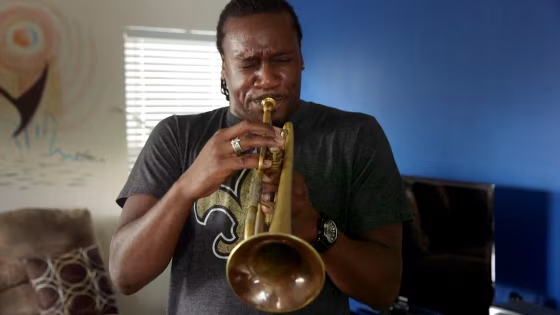
NEW ORLEANS — Ten years ago, there was only mud here. But today, on what was once an abandoned school lot, 72 brightly colored homes stand — almost defiantly — as emblems of New Orleans’ resilience a decade after Hurricane Katrina.
Together, these houses are called the Musicians’ Village. It’s a purposeful community: a place for low-income musicians to live (and own property) in an increasingly expensive city, and an attempted bulwark against the changing demographics that threaten New Orleans’ unique culture.
Katrina hit the city’s historically black communities particularly hard. So when those residents — poor, black people — were forced to leave, settle in places like Houston and wonder whether they could ever return, New Orleans’ spirit was under siege. These were, after all, the people who made the city’s music.







 FOR SUBSCRIBERSA harrowing ordeal aboard an Israel-bound plane







FOR SUBSCRIBERSThe debate over AI’s future rages on both coasts

“The music of New Orleans, the sound of New Orleans,” Jan Ramsey, editor in chief of Offbeat magazine explained, “is black music. It’s based in the black community.”
As the city’s black population dwindled, then, “the big question was what’s going to happen to the music, the culture,” Ramsey said. “Will these people come back?”
FOR SUBSCRIBERSA harrowing ordeal aboard an Israel-bound plane
FOR SUBSCRIBERSThe debate over AI’s future rages on both coasts
“Will they have a place to live?”
We went down to New Orleans to see how, if at all, the Musicians’ Village has helped answer those questions. And to see whether the music that has defined New Orleans for so long was still playing 10 years after Hurricane Katrina.

