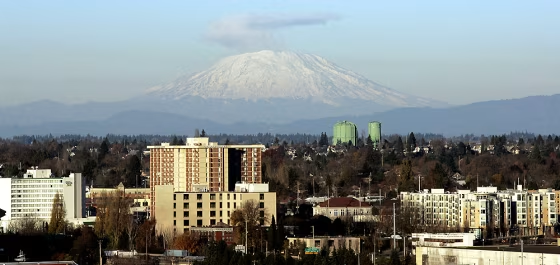
Rockfall at Mount St. Helens kicked up a dust plume Tuesday that rose above the rim of the volcano's crater, drawing attention in the region.
"It's a nice sunny day, and we're having the first couple of rockfalls that we've had in a while that are putting little dust plumes over the crater rim," U.S. Geological Survey geologist Seth Moran said at the agency's Cascade Volcano Observatory here, about 50 miles (80 kilometers) south of the mountain that erupted to deadly effect in May 1980.
Seismic activity has continued at low levels, Moran said.
The white plume floating above the peak was raising concerns locally.
"When rockfalls go down they kick up a dust plume and people can see it — especially from Portland," Moran said.
Overcast weather had hidden the mountain for weeks.
"Anytime you go through a pause" during which the mountain is not visible, people notice activity more when the peak comes back into view, Moran said.
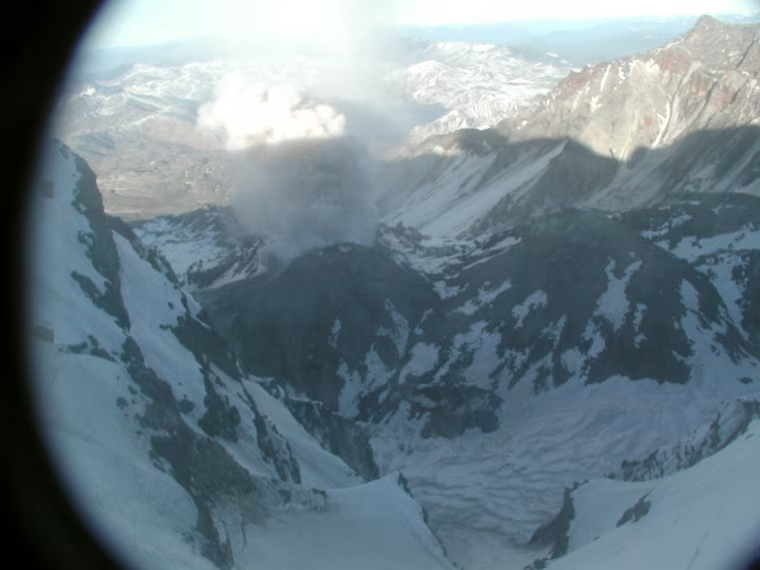
Mount St. Helens rumbled back to life in September 2004 after years of quiet. The next month, a flow of molten rock reached the surface, marking a renewal of dome-building activity that had stoppped in 1986.
The 1980 eruption killed 57 people, flattened forests and sent a river of hot mud and ash down the Toutle River Valley.
Twenty-five years later, the U.S. Geological Survey and the University of Washington continue to monitor the mountain.







 FOR SUBSCRIBERSA harrowing ordeal aboard an Israel-bound plane







FOR SUBSCRIBERSThe debate over AI’s future rages on both coasts

FOR SUBSCRIBERSA harrowing ordeal aboard an Israel-bound plane
FOR SUBSCRIBERSThe debate over AI’s future rages on both coasts
Scientists say a more explosive eruption, possibly dropping ash within a 10-mile (16-kilometer) radius of the crater, is possible at any time.