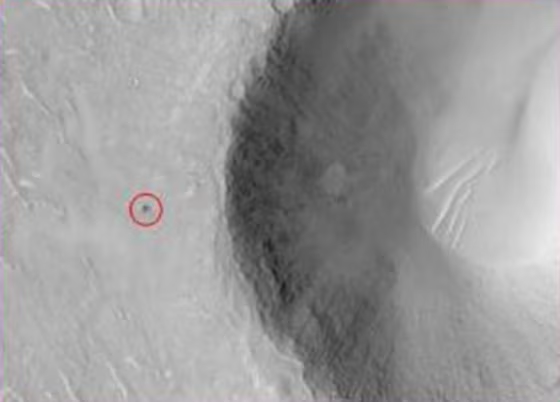
The British scientist behind the failed Beagle 2 probe said Tuesday he believes he has located the craft’s wreckage on the surface of Mars.
Nothing has been heard from Beagle 2 — named for the ship that took naturalist Charles Darwin on his 19th-century voyage of discovery — since it separated from its mother ship Dec. 19, 2003. It had been due to land on Mars six days later.
Colin Pillinger, the lead scientist on the mission, said the latest images from NASA’s Mars Global Surveyor spacecraft suggested Beagle plunged into a crater near its planned landing site.
While the 143-pound (65-kilogram) craft is too small to be seen in the pictures, Pillinger said the crater showed signs of a heavy impact.
“There is a lot of disturbance in this crater, particularly a big patch on the north crater wall, which we think is the primary impact site,” Pillinger told the British Broadcasting Corp.
“There are then other features around the crater consistent with the airbags bouncing around and finally falling down into the middle. Then, when you cut the lace, the airbags fall apart giving three very symmetrical triangles.”
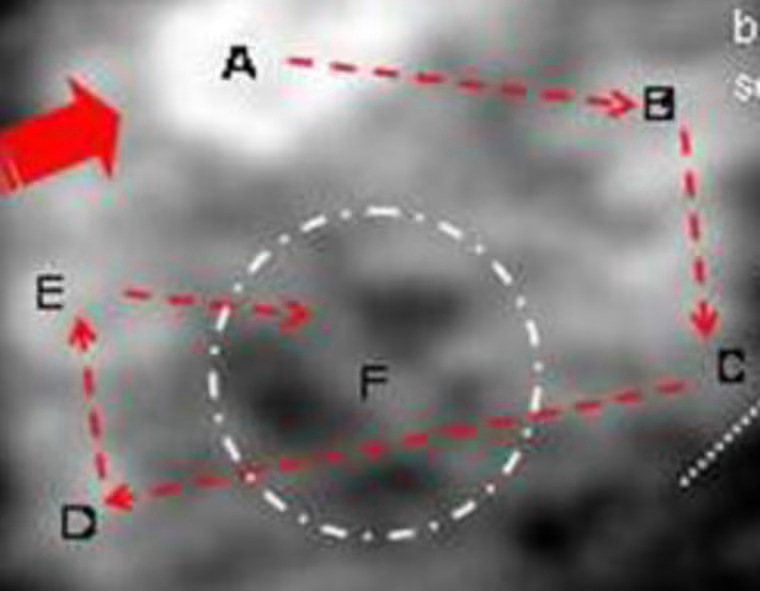
Scientists attempted to contact Beagle for months after it disappeared before admitting defeat.
An internal report in 2004 gave no definitive reason for the loss of the craft but suggested Beagle may have hit the planet’s surface too hard because Mars’ atmosphere was not as dense as expected due to dust storms.







 FOR SUBSCRIBERSA harrowing ordeal aboard an Israel-bound plane







FOR SUBSCRIBERSThe debate over AI’s future rages on both coasts

FOR SUBSCRIBERSA harrowing ordeal aboard an Israel-bound plane
FOR SUBSCRIBERSThe debate over AI’s future rages on both coasts
The loss of the probe, which cost the government more than $40 million and the private sector another $80 million, prompted questions in Britain about Europe’s ability to participate in the race to Mars.
Pillinger is seeking funds and sponsorship for a fresh mission to Mars, possibly as early as 2007.