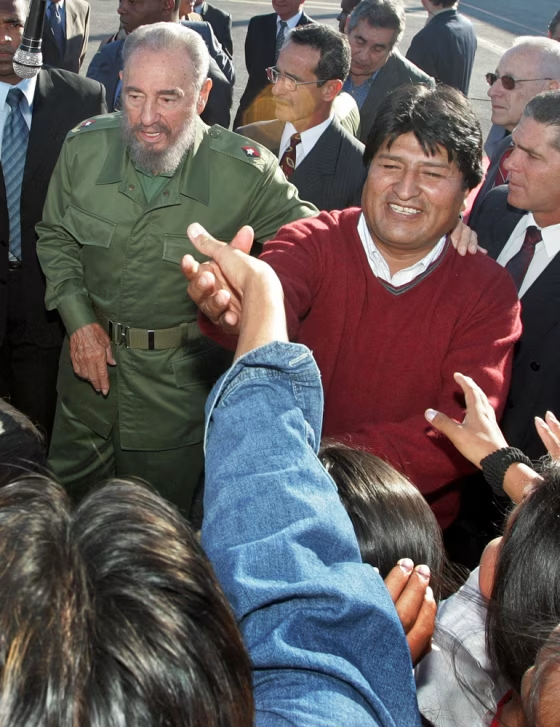
Bolivia’s socialist president-elect got a greeting reserved for heads of state when he arrived in communist Cuba on Friday: a red carpet, a military band and a smiling Fidel Castro.
Stepping off the Cuban plane sent to pick him up in Bolivia, Evo Morales said his trip to the Caribbean island was “a gesture of friendship to the Cuban people.”
Castro embraced Morales, who has visited the island in the past as one of Latin America’s leading protest organizers. The Cuban government has welcomed the election of the nationalist Indian activist as an important triumph over U.S. influence in the region.
“I think that it has moved the world,” Castro told reporters of Morales’ electoral victory. “It’s something extraordinary, something historic.”
“The map is changing,” said the Cuban leader.
United in American opposition
The 79-year-old Castro has been one of the U.S. government’s biggest headaches in the region during his 47 years in power. And Morales, a nationalist Indian activist, has repeatedly declared himself an admirer of Castro and has vowed to become a “nightmare” for Washington.
Nevertheless, since his election Morales has offered a more conciliatory message, telling business leaders he will create a climate favorable for investment and jobs and will not “expropriate or confiscate any assets.”







 FOR SUBSCRIBERSA harrowing ordeal aboard an Israel-bound plane






FOR SUBSCRIBERSThe debate over AI’s future rages on both coasts

Morales, who will be inaugurated on Jan. 22, won the presidency with nearly 54 percent of the vote — the most support for any president since democracy was restored to Bolivia two decades ago.
FOR SUBSCRIBERSA harrowing ordeal aboard an Israel-bound plane
FOR SUBSCRIBERSThe debate over AI’s future rages on both coasts
He joins a growing number of left-leaning elected leaders in Latin America, some of whom are not shy about criticizing the United States. Venezuelan President Hugo Chavez, Castro’s close friend and ally, has repeatedly accused U.S. officials of plotting to assassinate him.
An Indian coca farmer and former protest leader, Morales campaigned on promises to halt a U.S.-backed coca eradication campaign in Bolivia.
He has vowed to promote legal markets for coca leaf, which is used to make cocaine but also has many legal uses in Bolivia. He has also said he will crack down on drug trafficking.
The president-elect was to meet later in the day with Castro, though no details on the planned talks were made available.