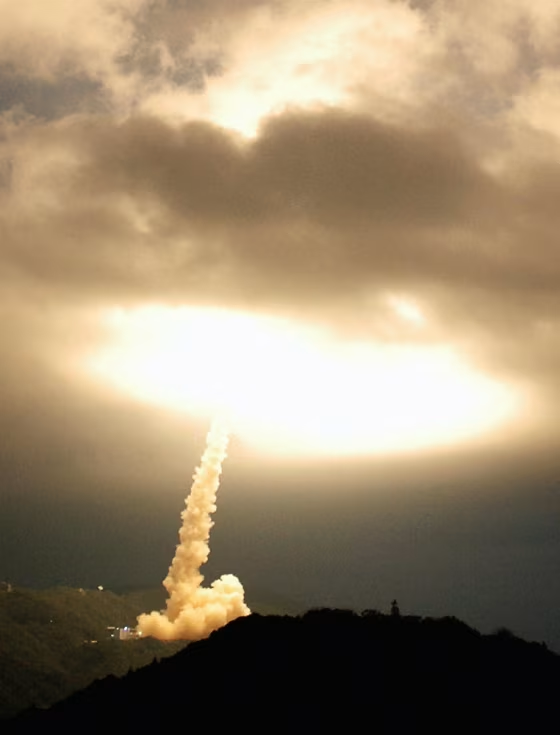
Japan’s space agency on Wednesday launched a satellite into orbit around the Earth, where it will map the sky using infrared wavelengths.
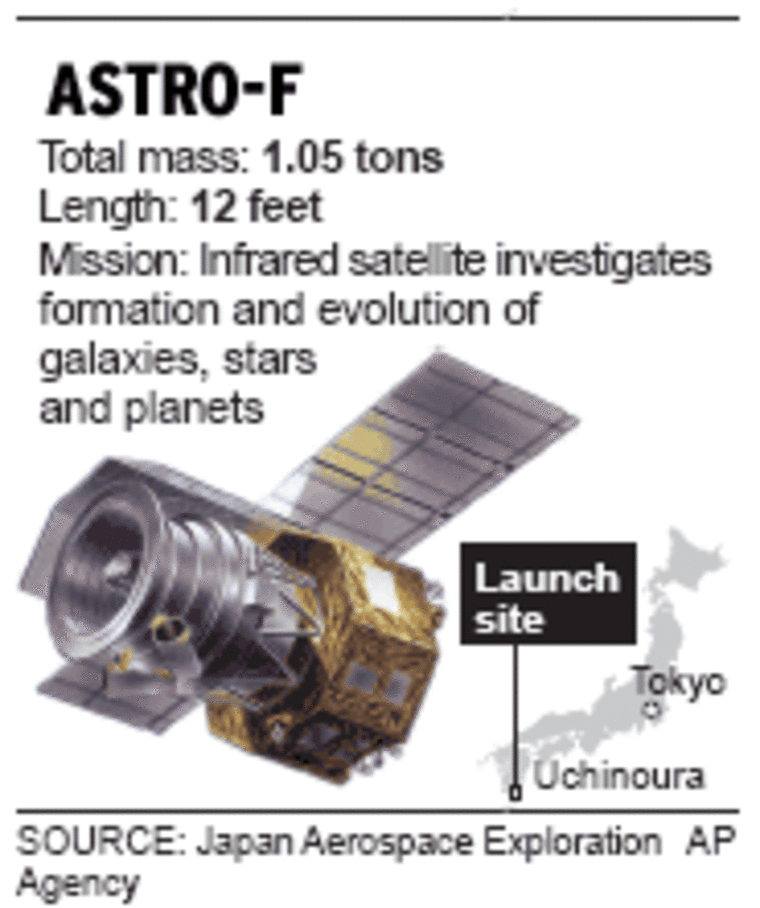
The launch of the one-ton ASTRO-F — first developed by Britain, the United States and the Netherlands — follows a string of successes for the agency, which has struggled in the past.
An M-5 rocket carrying the sky-mapping satellite lifted off from Uchinoura, 620 miles (990 kilometers) southwest of Tokyo, later entering its planned orbit and flying normally, Japan Aerospace Exploration Agency spokeswoman Nobuko Sato said.
Japan has recently been racing to catch up with China, a regional rival that has put astronauts in space twice since 2003 — only the third country to send a human into orbit on its own after Russia and the U.S.
Following Beijing’s success, Japan — which put its first satellite in orbit in 1972 — said it was reconsidering its focus on unmanned missions, announcing plans to send its first astronauts into space and set up a base on the moon by 2025.
The agency launched two H-2A rockets from the remote, southern island of Tanegashima in January and February, each carrying observation satellites.







 FOR SUBSCRIBERSA harrowing ordeal aboard an Israel-bound plane







FOR SUBSCRIBERSThe debate over AI’s future rages on both coasts

FOR SUBSCRIBERSA harrowing ordeal aboard an Israel-bound plane
FOR SUBSCRIBERSThe debate over AI’s future rages on both coasts
Japan has also said it will launch two spy satellites by March 2007 to monitor North Korea and other trouble spots — a program approved after North Korea launched a missile over Japan’s main island in 1998.