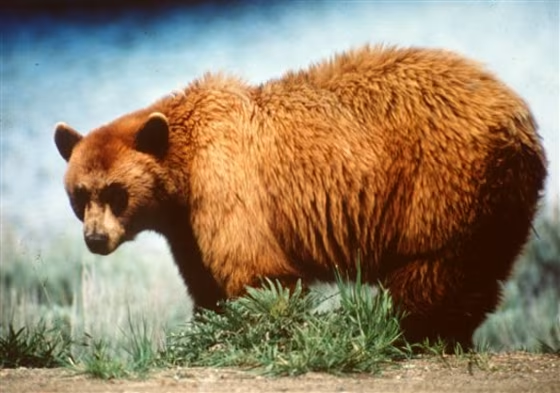
More than 250 scientists and researchers have signed a letter protesting a federal proposal to no longer protect grizzly bears in the Yellowstone area under the Endangered Species Act.
The letter, dated Monday, was addressed to Chris Servheen, the U.S. Fish and Wildlife Service’s grizzly bear recovery coordinator. Servheen has said he expects a final decision on the proposal by year’s end or early next year.
Among those signing the letter were primatologist Jane Goodall and bear researchers Chuck Jonkel and John Craighead Sr.
The Fish and Wildlife Service proposed in November “delisting” bears in the Yellowstone area, declaring them recovered. The bears currently are classified as threatened.
The agency said the population has grown 4 percent to 7 percent a year since the mid-’90s, and it estimated the number of bears at more than 600.
The scientists and researchers said in their letter that an isolated population of 500 to 600 bears does not constitute a biologically recovered one.
A population of 2,000 to 3,000 is needed for genetic diversity and to withstand regional variations such as food sources, they said. A smaller one is likely to go extinct, they argued.







 FOR SUBSCRIBERSA harrowing ordeal aboard an Israel-bound plane







FOR SUBSCRIBERSThe debate over AI’s future rages on both coasts

In a conference call Thursday, three researchers also questioned the accuracy of the agency’s population estimates.
FOR SUBSCRIBERSA harrowing ordeal aboard an Israel-bound plane
FOR SUBSCRIBERSThe debate over AI’s future rages on both coasts
Monday marked the end of the comment period on the proposal.
Seth Willey, acting recovery coordinator for the Fish and Wildlife Service’s regional office in Denver, said the agency has received about 160,000 comments, many from “recognized academics” who have worked on the issue for years.
The proposal affects bears in Yellowstone and Grand Teton national parks and surrounding national forests in parts of Wyoming, Idaho and Montana.