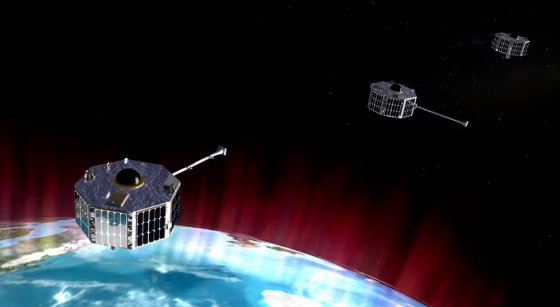
NASA fired three microsatellites into space over the Pacific Ocean on Wednesday to study Earth's magnetic fields, a week after a planned launch was scrubbed due to a technical malfunction.
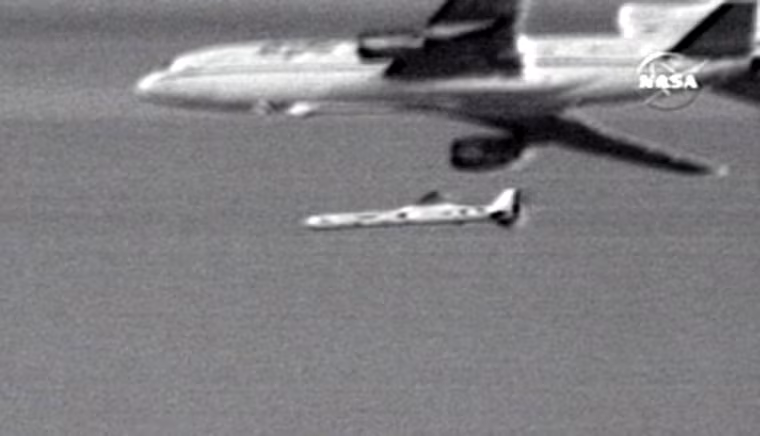
The 55-pound (24.75-kilogram) Space Technology 5 satellites, which will test new technologies for future science missions, were carried aloft from Vandenberg Air Force Base aboard a Lockheed L-1011 jet.
Shortly after 6 a.m. PT (9 a.m. ET), when the plane reached 39,000 feet (11,700 meters), a compact Pegasus rocket dropped from the aircraft's belly, fired its engine and ferried the satellites on a 10-minute climb into space. The launch was broadcast live on NASA's television channel.
The mission's goal is to demonstrate the benefits of a group of small, low-cost satellites simultaneously measuring the earth's magnetic fields from different locations.
The ST5 project is part of NASA's New Millennium Program, which was created to identify, build and test innovative technologies for use in future missions.
A week ago, a technical glitch caused NASA to scrub the rocket release. The agency never determined the exact nature of the problem, but surmised it was caused by a locking pin in the rocket's flight control, which failed to retract before launch because ice had formed on it.