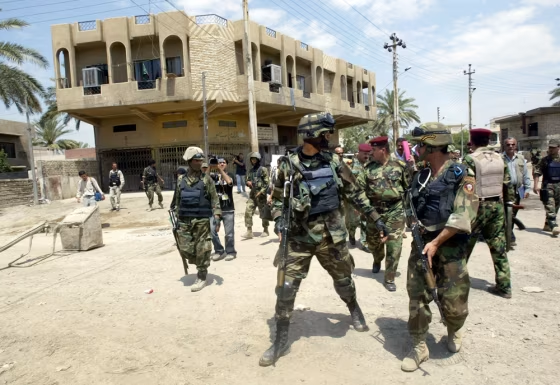
The U.S. military said on Thursday Iraq was moving away from the risk of civil war and insurgent and sectarian bloodshed would fall dramatically when a new government of national unity is formed.
Attacks on civilians had jumped 90 percent across Iraq since a Shiite shrine was bombed in February, but “ethno-sectarian” bloodshed had more than halved in Baghdad in the past week, U.S. spokesman Major General Rick Lynch told a news conference.
“We are not seeing widespread militia operations across Iraq. We are not seeing widespread movement of displaced personnel,” he said. “So we do not see us moving towards a civil war in Iraq. In fact we see us moving away from it.”
The Sunni Arab insurgency against U.S. and Iraqi forces and the mounting sectarian violence against civilians after the shrine attack raised fears Iraq was sliding into civil war.
Prime Minister-designate Nuri al-Maliki hopes to form a new government uniting majority Shiites with Sunni Arabs and Kurds next week, a move widely seen as critical to ending the bloodshed.
“We believe that the people of Iraq ... have grown tired of the insurgency, have grown tired of these casualties and indeed are going stop this cycle of violence,” Lynch said.
“And when the government is formed and truly reaches out to the people, we believe you’ll see a great decline in violent activities in Iraq.”







 FOR SUBSCRIBERSA harrowing ordeal aboard an Israel-bound plane







FOR SUBSCRIBERSThe debate over AI’s future rages on both coasts

U.S. Secretary of State Condoleezza Rice and Defense Secretary Donald Rumsfeld ended a two-day visit on Thursday designed to show support for Maliki, a tough-talking Shiite, and at the same time press him to choose his cabinet wisely.
FOR SUBSCRIBERSA harrowing ordeal aboard an Israel-bound plane
FOR SUBSCRIBERSThe debate over AI’s future rages on both coasts
Lynch said the leader of al-Qaida in Iraq, Sunni Jordanian Abu Musab al-Zarqawi, was trying to foment sectarian violence to prevent a new government, saying the group killed the brother and sister of new Sunni Vice President Tareq al-Hashemi.
“Because now you have got a Sunni politician who is standing up for the people of Iraq and saying let’s do the right thing for the people of Iraq and not worry about Sunnis versus Shias versus Kurds,” he said.
Hashemi’s sister was killed as she drove to work on Thursday and his brother was killed two weeks ago.
Last October, the brother of the other vice president, Shiite Adel Abdul Mahdi, was also killed.