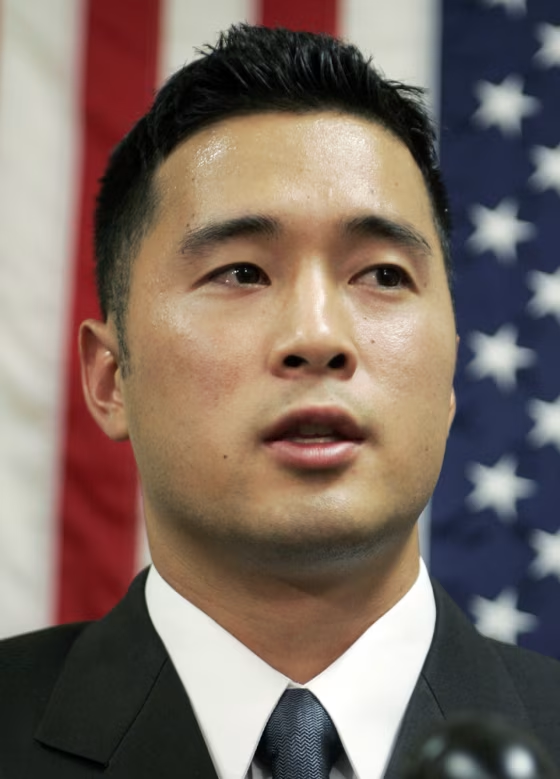
An Army officer is recommending that a lieutenant who refused to serve in Iraq because he believes the war is illegal face trial, a Fort Lewis spokesman said.
1st Lt. Ehren Watada, 28, of Honolulu, has been charged with missing troop movement, conduct unbecoming an officer and contempt toward officials. He refused to deploy to Iraq on June 22 with his Fort Lewis-based unit.
A report by the investigating officer, Lt. Col. Mark Keith, “does recommend that the case be tried by general court-martial,” J.C. Mathews, a civilian spokesman at the Army base south of Seattle, said late Thursday.
Keith’s report was expected to be released Friday.
The Army laid out its case against Watada at a hearing last week, showing video footage of the lieutenant calling the war illegal.
Keith could recommend anything from dismissal of the charges to a general court-martial.
His recommendation goes to Watada’s brigade commander, Col. Cynthia Murphy, and to Lt. Gen. James Dubik, Fort Lewis’ commander, who has the final say on whether Watada should stand trial, Mathews said.
If convicted, Watada could face seven years in prison and dishonorable discharge.







 FOR SUBSCRIBERSA harrowing ordeal aboard an Israel-bound plane







FOR SUBSCRIBERSThe debate over AI’s future rages on both coasts

FOR SUBSCRIBERSA harrowing ordeal aboard an Israel-bound plane
FOR SUBSCRIBERSThe debate over AI’s future rages on both coasts
Mathews said there is no timetable for Dubik’s decision.
Watada’s lawyer, Eric Seitz, said he was not surprised by the recommendation.
“We always believed that when they went so far as to convene an Article 32 hearing that they had already made a decision to proceed,” he said in a telephone interview. An Article 32 hearing is similar to a grand jury proceeding.
Seitz, who has seen Keith’s report, said he expects to learn Dubik’s decision in 10 to 14 days.
Watada could not immediately be reached for comment.