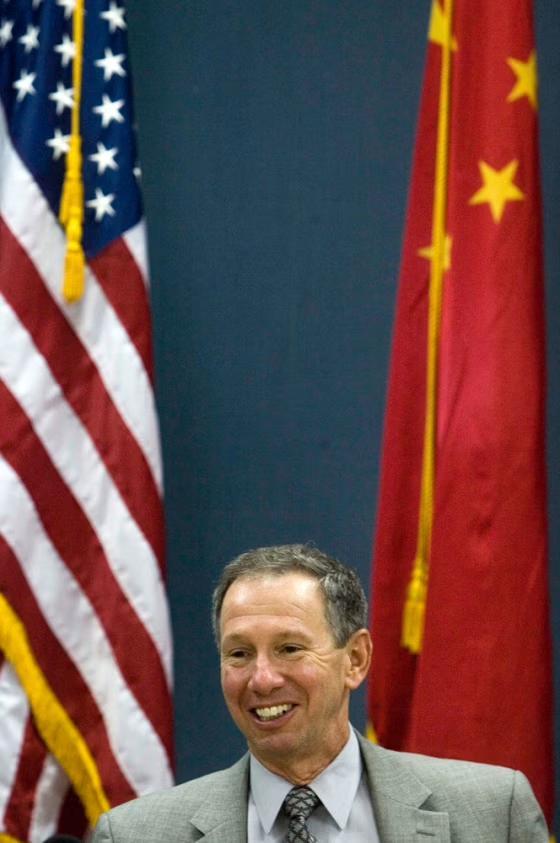
The U.S. space agency and China’s civilian space program are considering working together on some projects, but joint missions into space are still a long way off, NASA's administrator said Monday.
Michael Griffin, the first NASA administrator to visit China, welcomed the country to “the fraternity of spacefaring nations” at a news briefing in Beijing.
He said that the two programs were considering holding annual meetings, and that areas for working together could include earth science, climate research, data sharing and robotics.
“But collaboration on human missions would be well down the road. This is only the first step,” said Griffin.
China put its first human in space aboard the Shenzhou 5 in 2003 and completed its second manned space mission last October. State media have said it aims to put a human on the moon around 2017.
Griffin added that the United States had no immediate plans to ask China to join the international space station program, on which the United States cooperates with 15 other countries — Canada, Japan, Russia, Brazil and 11 participating member nations of the European Space Agency.







 FOR SUBSCRIBERSA harrowing ordeal aboard an Israel-bound plane







FOR SUBSCRIBERSThe debate over AI’s future rages on both coasts

“The partnerships that led to the development of the ISS are well established. I do not propose to change any of those arrangements at the present time,” he said.
FOR SUBSCRIBERSA harrowing ordeal aboard an Israel-bound plane
FOR SUBSCRIBERSThe debate over AI’s future rages on both coasts
Griffin also stressed that key differences remained between the United States and China on certain aspects of their space programs, including what Washington views as Beijing’s insufficient control over missile technology.
“We have been very firm on that in the past, and I believe we will continue to be firm on the importance of appropriately controlling missile technology,” he said.