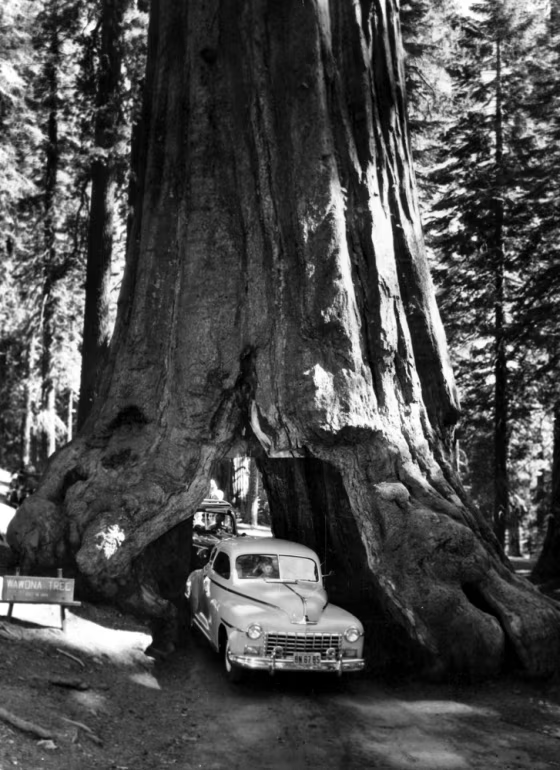
A redwood tree discovered in a remote California forest has turned out to be the world’s tallest tree, edging out one nearby that had been the previous titleholder, a botanist said Friday.
Humboldt State University Professor Steve Sillett told Reuters the record-setting tree, named Hyperion, is 379.1 feet tall, besting the previous record holder, the 370.5-foot-tall Stratosphere Giant.
Researchers exploring remote and rugged terrain this summer in the Redwood National and State Parks along California’s northernmost coast also discovered two other redwoods taller than the Stratosphere Giant, suggesting there had been many more massive ancient redwoods in the area, Sillett said.

 FOR SUBSCRIBERSCBP leaders cut out of Trump ad buy decision








FOR SUBSCRIBERSA harrowing ordeal aboard an Israel-bound plane





Some of those taller trees may have fallen to loggers, while the remaining ones were saved by a logging ban when the Redwood National Park was expanded in 1978, Sillett said.
FOR SUBSCRIBERSCBP leaders cut out of Trump ad buy decision
FOR SUBSCRIBERSA harrowing ordeal aboard an Israel-bound plane
Officials would not pinpoint the exact locations of the trees out of concern that too many visitors could damage the delicate ecology of the mild, foggy slopes where the trees live
“What we have today is a few small remnants that suggest what these trees are capable of doing,” Sillett said.