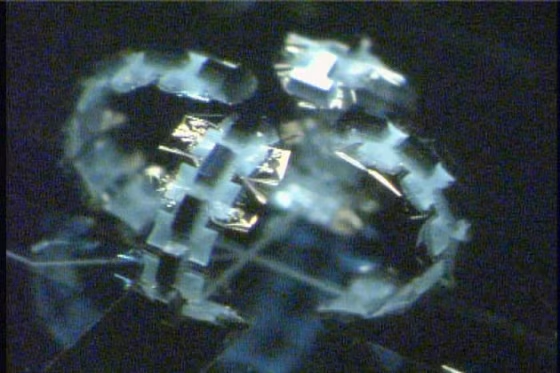
A microscopic robot hand, made of silicon and plastic balloons, could help perform surgery and defuse bombs.
The "microhand" is so tiny that when clenched into a fist it measures a little over 1 millimeter across, or roughly as thick as a dime. It is made using silicon finger bones and balloons for joints that inflate and deflate to flex the fingers.
The robot hand was designed by microelectromechanical systems scientist Yen-Wen Lu at Rutgers University in Piscataway, N.J., and mechanical engineer Chang-Jin Kim at the University of California at Los Angeles. The prototype has four fingers arranged into a cross, each digit roughly a half-millimeter long, made via conventional semiconductor manufacturing techniques normally used to assemble electronics.

 FOR SUBSCRIBERSCBP leaders cut out of Trump ad buy decision









FOR SUBSCRIBERSA harrowing ordeal aboard an Israel-bound plane





The microhand is gentle but strong enough to pluck a single delicate fish egg from a sticky egg mass.
FOR SUBSCRIBERSCBP leaders cut out of Trump ad buy decision
FOR SUBSCRIBERSA harrowing ordeal aboard an Israel-bound plane
"You could imagine this being used for microsurgery — at the end of a catheter, for instance. We found we could grab a nerve bundle with it," Kim told LiveScience. "We are also working with a company who said this could help disarm explosives. Right now the robotic manipulators used there are pretty crude, and a gentle and dexterous hand would be helpful."
Lu and Kim reported their findings online Oct. 16 via the journal Applied Physics Letters.