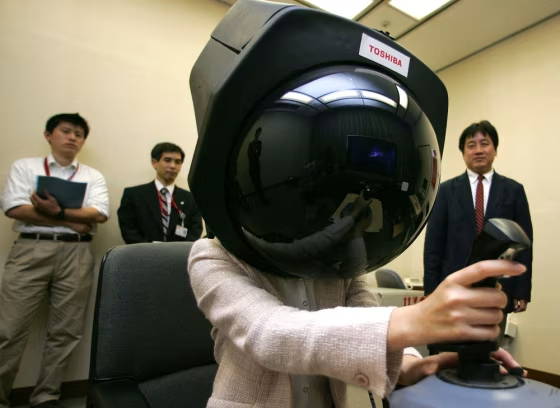
It's about as glamorous as wearing an old-style TV set on your head, but the dome-shaped headgear from Japanese electronics maker Toshiba Corp. isn't meant to be fashionable. It's designed to show images in a 360-degree view — synched with the motion of the wearer's head to deliver the illusion of being someplace else: a cityscape at night, for example, or outer space.







 FOR SUBSCRIBERSA harrowing ordeal aboard an Israel-bound plane







FOR SUBSCRIBERSThe debate over AI’s future rages on both coasts

The still experimental 6-pound bubble-headed helmet has infrared sensors on top that detect which way the wearer's head is moving. A projector in the back of the helmet displays corresponding images on a 16-inch screen right before the user's eyes.
FOR SUBSCRIBERSA harrowing ordeal aboard an Israel-bound plane
FOR SUBSCRIBERSThe debate over AI’s future rages on both coasts
Although the headgear looks bulky, it's actually smaller than older versions of the same technology, Toshiba spokeswoman Kaori Hiraki said.
But Toshiba has no plans yet to turn the helmet into a commercial virtual-reality product. Eventually, Toshiba believes, it will come in handy for computer games or enhancing the impact of movies.