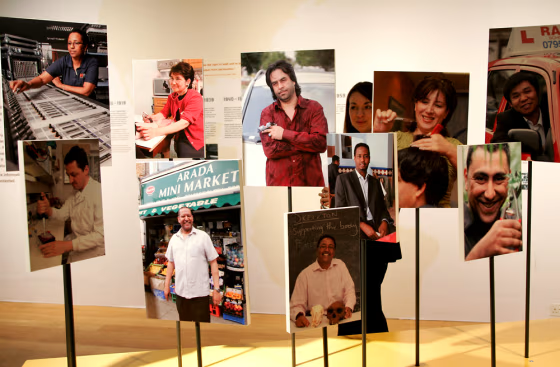
An Iraqi doctor tortured by Saddam Hussein’s Baath Party. A Kurdish wheelchair athlete. An Eritrean man who was blinded while fighting for his country’s independence. A Syrian TV and film actor.
These are some of the thousands of refugees in Britain’s capital, and their stories form a new exhibition at the Museum of London.
The show, opening Friday, features more than 150 interviews with refugees who describe with videos, personal belongings and art how they rebuilt their lives after fleeing political persecution. The exhibit seeks to challenge bad publicity and misconceptions about refugees by highlighting the contributions they have made to the culture and economy of London, said Clea Relly, a museum spokeswoman.
Among the objects on view are a white blanket that kept an Ethiopian man warm at Heathrow Airport during his first night in London and the work of an artist from Ecuador who painted London’s classic red telephone booths.
One story is of Mahdi Mahdi, a 57-year-old owner of a Mediterranean food company, who fled persecution by the ruling Baath Party in Iraq in 1979. He was imprisoned and tortured for refusing to identify with the party, he said in an interview.
Mahdi, a doctor in Baghdad, forged a passport and flew to Algeria where he lived for nearly 13 years, met his wife and started a family, he said. Instability in Algeria forced him to leave in 1992, when he took his wife and daughters to London. Unable to qualify as a doctor in Britain, Mahdi and his family cooked falafel in the back of a small house and tried to sell it to stores.
 FOR SUBSCRIBERSCBP leaders cut out of Trump ad buy decision







FOR SUBSCRIBERSA harrowing ordeal aboard an Israel-bound plane





“We began from the zero point and with no financial support, and within seven to eight years, now we have a well-known factory,” said Mahdi, who has more than 30 employees.
FOR SUBSCRIBERSCBP leaders cut out of Trump ad buy decision
FOR SUBSCRIBERSA harrowing ordeal aboard an Israel-bound plane
Nidia Castro, a refugee support worker, was born in Chile in 1932. She wrote articles for a clandestine socialist newspaper after Salvador Allende, the elected Marxist president was toppled by Gen. Augusto Pinochet in a 1973 coup. Castro was arrested and tortured and in 1976 fled to England with her three children.
“Terrible things can happen to anyone,” Castro said. “You have to start a new life, and people should think that these refugees are human beings like anybody else — like their friends, their cousins, their sisters. Just human beings, that’s all.”
Between 2004 and 2006, Britain received more than 60,000 applications from asylum seekers, according to statistics from the Home Office. In the past year, the majority of applicants were from Zimbabwe, Eritrea and Afghanistan.