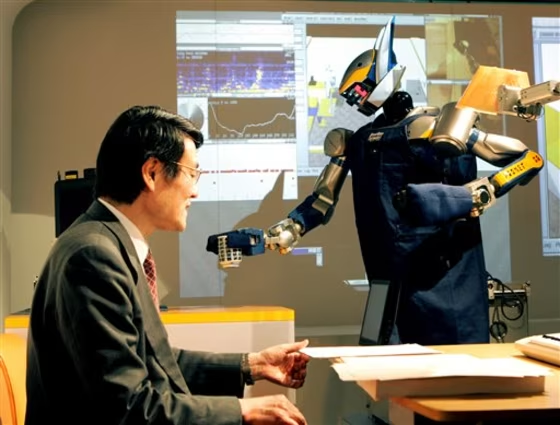
Japan is pretty serious about robotics. If the droids are going to fit in, they probably need to learn the Japanese custom of serving tea.
Fortunately, researchers at the University of Tokyo are exploring just that. In a demonstration this week, a humanoid with camera eyes made by Kawada Industries Inc. poured tea from a bottle into a cup.
Then another robot on wheels delivered the cup of tea in an experimental room that has sensors embedded in the floor and sofa as well as cameras on the ceiling, to simulate life with robot technology.







 FOR SUBSCRIBERSA harrowing ordeal aboard an Israel-bound plane







FOR SUBSCRIBERSThe debate over AI’s future rages on both coasts

"A human being may be faster, but you'd have to say 'Thank you,'" said University of Tokyo professor Tomomasa Sato. "That's the best part about a robot. You don't have to feel bad about asking it to do things."
Sato believes Japan, a rapidly aging society where more than a fifth of the population is 65 or older, will lead the world in designing robots to care for the elderly, sick and bedridden.
FOR SUBSCRIBERSA harrowing ordeal aboard an Israel-bound plane
FOR SUBSCRIBERSThe debate over AI’s future rages on both coasts
Already, monitoring technologies, such as sensors that automatically turn on lights when people enter a room, are becoming widespread in Japan. The walking, child-size Asimo from Honda Motor Co. greets people at showrooms. NEC Corp. has developed a smaller companion robot-on-wheels called Papero. A seal robot available since 2004 can entertain the elderly and others in need of fuzzy companionship.
Sato says his experimental room is raising awareness about privacy questions that may arise when electronic devices monitor a person's movements down to the smallest detail. On the bright side, the tea-pouring humanoid has been programmed to do the dishes.