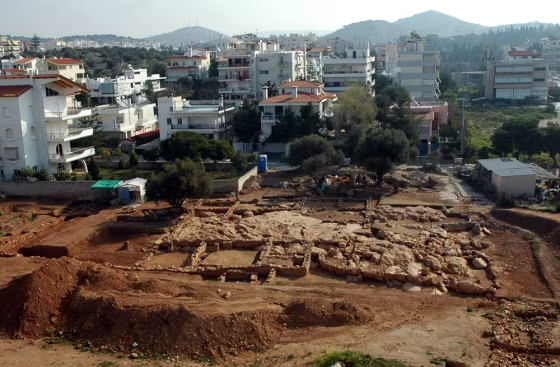
Archaeologists have discovered extensive remains of what is believed to be an ancient marketplace with shops and a religious center at the southern edge of Athens, the Culture Ministry said Friday. The finds, in the coastal neighborhood of Voula, date from the 4th or 5th century B.C.
"It is a very large complex," the ministry said. "It was a site of rich financial and religious activity, which was most probably a marketplace."
Marketplaces — or agoras — teemed with shops, open-air stalls and administrative buildings, and were the financial, political and social center of ancient Greek life.

 FOR SUBSCRIBERSCBP leaders cut out of Trump ad buy decision









FOR SUBSCRIBERSA harrowing ordeal aboard an Israel-bound plane





Archaeologists believe the complex belonged to the municipality of Aexonides Halai, among the largest settlements surrounding ancient Athens.
The main building was a hollow square with a rock-cut reservoir in the center. The building had 12 rooms — probably shops — and a small temple with an open-air altar.
FOR SUBSCRIBERSCBP leaders cut out of Trump ad buy decision
FOR SUBSCRIBERSA harrowing ordeal aboard an Israel-bound plane
Finds included large quantities of pottery, coins and lead weights that would have been used in transactions by traders.
Last month, archaeologists discovered an ancient theater in the northwestern Athens suburb of Menidi.