An index meant to foreshadow the direction of the economy said Thursday that the growth will advance modestly this year, but will be hobbled by sluggish manufacturing and weakness throughout the housing industry.
Industry research group The Conference Board said Thursday that its composite index of leading indicators, which is meant to project changes in the economy six to nine months in advance, slipped 0.5 percent to 137.3 in February after a revised 0.3 percent decline to 138 in January.
The drop in February, while expected, was the steepest since February 2006.
Conference Board labor economist Ken Goldstein said in a statement that the index suggests "moderate but choppy" economic growth, with consumers continuing to spend despite swings in energy prices and sagging home values.
The index tracks 10 economic indicators, including stock prices, unemployment claims, homebuilding permits and money supply.
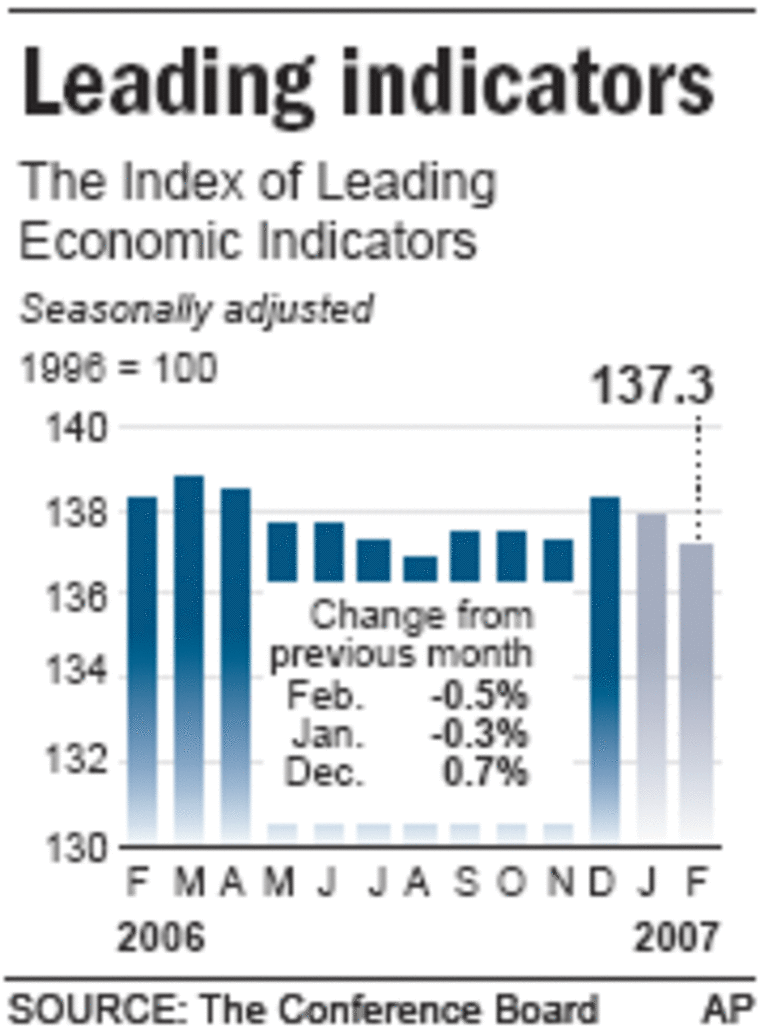
In February, more people filed for unemployment insurance, fewer homebuilders obtained permission to build houses and consumers adopted a more tempered outlook on the economy's future, the Conference Board said.
"This is consistent with the outlook that the economy will probably grow at a moderate pace over the next six to nine months," said Gary R. Thayer, chief economist at A.G. Edwards & Sons Inc.







 FOR SUBSCRIBERSA harrowing ordeal aboard an Israel-bound plane







FOR SUBSCRIBERSThe debate over AI’s future rages on both coasts

FOR SUBSCRIBERSA harrowing ordeal aboard an Israel-bound plane
FOR SUBSCRIBERSThe debate over AI’s future rages on both coasts
The weak housing market and a slowdown in manufacturing might have crimped the economy more severely in the past, Thayer said, but the U.S. has undergone a transition to a service-based economy.
With the employment rate relatively high, Thayer said consumers facing a cooling economy still "feel pretty good about things."
The coincident index increased 0.3 percent in February after a 0.1 percent decline in January and the lagging index increased 0.2 percent in February after increasing 0.7 percent in December.