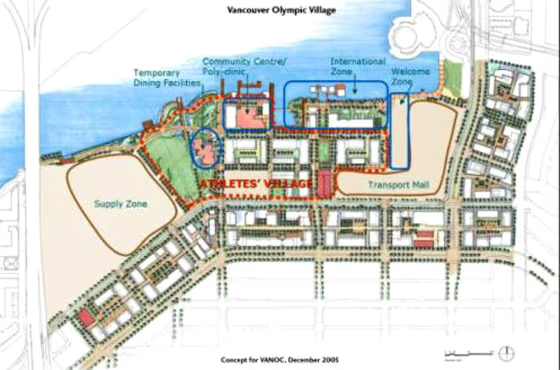
In an effort to make the 2010 Winter Olympics as environmentally friendly as possible, the city of Vancouver is turning to its sewers to help heat the athletes' village.
Officials, trying to develop a sustainable energy system to heat the buildings, decided to use heat from the sewers after community opposition meant a proposed biomass system, which would have used fuels such as wood chips, could not be built in time.
"It's very similar to geothermal energy," Chris Baber, project manager for the city of Vancouver's Neighborhood Energy Utility, said of the sewer-heat system.







 FOR SUBSCRIBERSA harrowing ordeal aboard an Israel-bound plane







FOR SUBSCRIBERSThe debate over AI’s future rages on both coasts

Much as geothermal systems use heat exchangers to extract heat from the soil, the sewer-heat system uses exchangers to extract the otherwise waste heat from the city's sewage. The heat can then be used to warm up buildings and provide hot water. Natural gas will be used as a supplemental energy source on exceptionally cold days, Baber said.
There are two similar sewer-heat recovery systems in operation in Norway and one in Japan, but Vancouver's would be the first in North America. It is scheduled to be completed in 2009.
FOR SUBSCRIBERSA harrowing ordeal aboard an Israel-bound plane
FOR SUBSCRIBERSThe debate over AI’s future rages on both coasts
Baber acknowledged the novelty of the system was one reason the city had wanted to use sustainable biomass fuels, such as wood chips or other plant materials, that are already in widespread use in Europe.
When fully constructed the sewer-heat recovery system will heat a wider neighborhood area that includes the athletes' village. The $17.7 million construction cost will be paid down using user fees, Baber said.