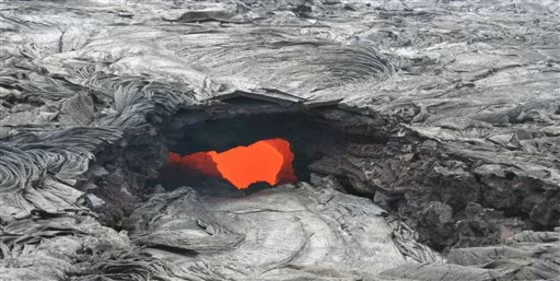
Lava oozed from a new location on Mount Kilauea, one of the world's most active volcanoes, scientists said Tuesday.
Researchers on the Big Island had been looking for a new lava breakout point after hundreds of small earthquakes were recorded Sunday, suggesting magma, or underground lava, was shifting beneath the surface.
The small outbreak oozed about 150 feet from a 600-foot-long fissure in a forest about eight miles southeast of Kilauea's summit, the U.S. Geological Survey's Hawaiian Volcano Observatory said on its Web site.







 FOR SUBSCRIBERSA harrowing ordeal aboard an Israel-bound plane







FOR SUBSCRIBERSThe debate over AI’s future rages on both coasts

When a field crew arrived, lava was moving sluggishly and the fissure was emitting heavy smoke and steam. By the time the crew left four hours later, the lava had stopped flowing and the smoke and steam had decreased significantly.
Part of the park on the Big Island remained closed to protect public safety while researchers examined the latest lava breakout.
FOR SUBSCRIBERSA harrowing ordeal aboard an Israel-bound plane
FOR SUBSCRIBERSThe debate over AI’s future rages on both coasts
Meanwhile, the state Department of Land and Natural Resources announced the closure of Pu'u 'O'o Trail. It will remain closed until further notice.
Kilauea has been erupting continuously since Jan. 3, 1983, sending lava from the Pu'u 'O'o cone through a system of tubes to the ocean where it forms new land over time.
In Hawaiian tradition, Kilauea is home to Pele, the volcano goddess. Lava is said to be her physical representation.