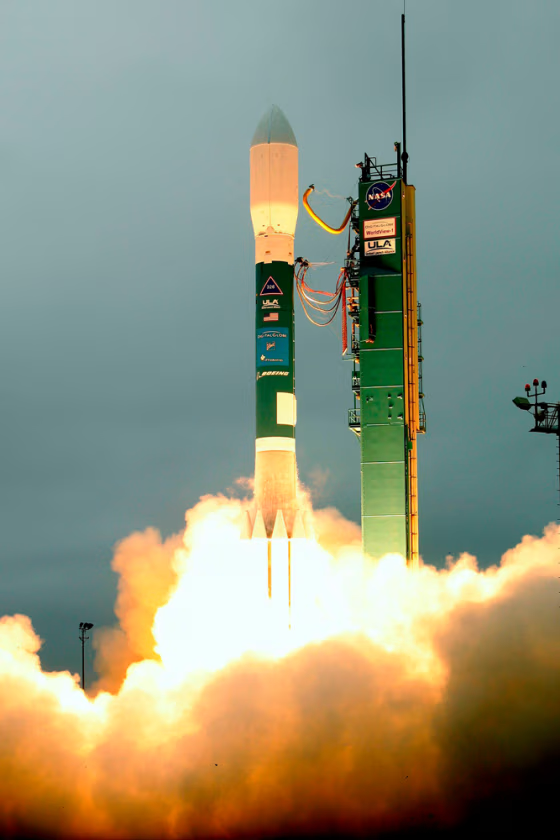
A rocket carrying a next-generation Earth-imaging satellite blasted off Tuesday on a mission that promises to zoom in on objects as small as 18 inches (50 centimeters) across.
The WorldView 1 satellite, built for DigitalGlobe, which supplies much of Google Earth’s imagery, was lofted into space aboard a Delta 2 rocket. The satellite separated from the rocket about an hour after liftoff and was circling 300 miles (480 kilometers) above Earth.
WorldView 1 was designed to collect up to 290,000 square miles’ (750,000 square kilometers’) worth of imagery a day — an area about the size of Texas. Information gathered by the 5,000-pound (2,270-kilogram) probe can be used by governments and companies to assess damage after a natural disaster or plan escape routes before a catastrophe, the company said.







 FOR SUBSCRIBERSA harrowing ordeal aboard an Israel-bound plane







FOR SUBSCRIBERSThe debate over AI’s future rages on both coasts

It is expected to be in operation for about seven years.
FOR SUBSCRIBERSA harrowing ordeal aboard an Israel-bound plane
FOR SUBSCRIBERSThe debate over AI’s future rages on both coasts
WorldView 1 is the first of two advanced remote sensing satellites that DigitalGlobe plans to launch. The company has said its sister satellite, WorldView 2, will be ready for launch late next year.
DigitalGlobe, a privately held Colorado-based provider of high-resolution commercial satellite imagery, also manages the QuickBird commercial satellite launched in 2001. While WorldView 1’s resolution is only slightly higher than QuickBird, the new probe can store more images because it has a larger onboard system.