Dakota the duckbilled dinosaur is coming home.
The 65-million-year-old fossilized hadrosaur found in North Dakota's Badlands a decade ago has been studied by paleontologists, had its innards scanned by NASA and starred in a National Geographic television documentary.
The dinosaur, expected to arrive Friday in a big truck, will be ready for public display in the State Historical Society of North Dakota in Bismarck in early June.

 FOR SUBSCRIBERSCBP leaders cut out of Trump ad buy decision









FOR SUBSCRIBERSA harrowing ordeal aboard an Israel-bound plane





The body portion weighs 8,000 pounds, and another portion weighs 1,500 pounds, including the tail. A third part, including a leg, is much smaller.
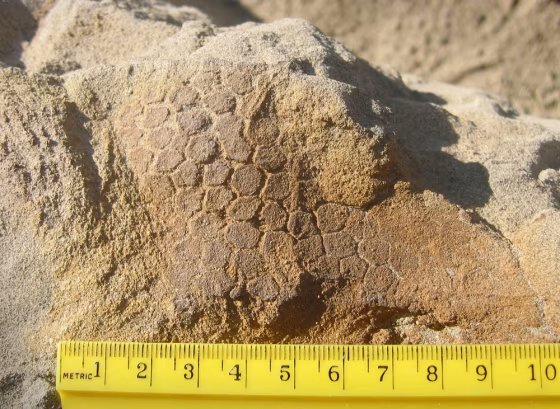
Unlike most collections of bones found in museums, this hadrosaur came complete with fossilized skin, ligaments, tendons and possibly some internal organs, according to researchers.
FOR SUBSCRIBERSCBP leaders cut out of Trump ad buy decision
FOR SUBSCRIBERSA harrowing ordeal aboard an Israel-bound plane
"To have something that was found here in North Dakota come back here to the Heritage Center is so great to have happen," said Merl Paaverud, the center's director. "It'll be wonderful for our kids."
The dinosaur was discovered in 1999 near Marmarth by Tyler Lyson, 24, who spotted its bony tail while hiking on his uncle's ranch in the Badlands.
Lyson, then a high school sophomore, noted the location of his find but didn't come back until five years later, when he discovered the rest of the creature.