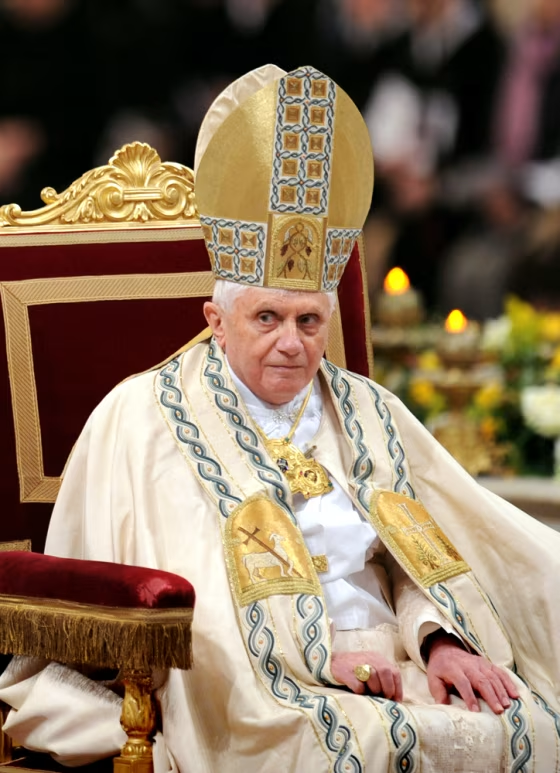
Pope Benedict XVI on Thursday defended the Vatican's right to speak out on bioethics, including its opposition to artificial procreation methods and embryonic stem cell research.
He also dismissed criticism that the Roman Catholic Church blocks scientific progress.
"Church teaching certainly cannot and must not weigh in on every novelty of science, but it has the task to reiterate the great values which are on the line and to propose to faithful and all men of good will ethical-moral principles and direction for new, important questions," Benedict said.

 FOR SUBSCRIBERSCBP leaders cut out of Trump ad buy decision









FOR SUBSCRIBERSA harrowing ordeal aboard an Israel-bound plane





Benedict brushed off those who criticize the church "as if it were an obstacle to science and to humanity's true progress."
The pope singled out as "new problems" the freezing of embryos, selecting which embryos should be implanted after testing them for defects, research on embryonic stem cells and attempts at human cloning.
FOR SUBSCRIBERSCBP leaders cut out of Trump ad buy decision
FOR SUBSCRIBERSA harrowing ordeal aboard an Israel-bound plane
He decried them as proof that "the barrier protecting human dignity has been broken."
Benedict was addressing a meeting of the Congregation for the Doctrine of the Faith, a powerful Vatican office which safeguards doctrinal orthodoxy. He headed that office before being elected pope in 2005.