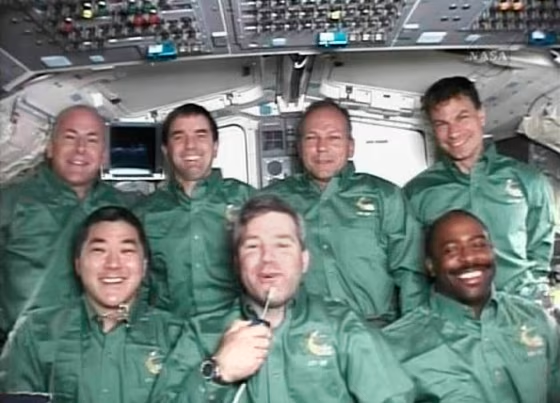
Atlantis’ astronauts aimed for a morning touchdown Wednesday to conclude a two-week mission that expanded the international space station with the addition of a new European lab.
Forecasters expected nearly perfect weather for Atlantis’ planned landing at Kennedy Space Center, but crews were standing by for a California landing just in case.
Atlantis’ first landing path would take the crew over the Pacific Ocean, Central America and the Gulf of Mexico before touching down at Cape Canaveral in Florida.
NASA normally does not activate the West Coast landing strip so early but wants to get Atlantis down on Wednesday if at all possible to give the Navy more time to shoot down a dying spy satellite.
The government has indicated it plans take aim at the satellite as early as Wednesday night, before it enters Earth’s atmosphere with a toxic load of fuel. But the shot can’t be fired until Atlantis has landed because it would be dangerous for the shuttle to descend through the debris.
Although the Defense Department has a short window of opportunity to shoot down the satellite, NASA officials said they were under no pressure to hurry up the touchdown. Atlantis will spend another day in space if the weather turns bad at both landing sites, flight director Bryan Lunney said.
NASA cleared Atlantis for landing after engineers finished evaluating the latest laser images of the shuttle’s wings and nose and concluded there were no holes or cracks from micrometeorites or space junk.

 FOR SUBSCRIBERSCBP leaders cut out of Trump ad buy decision









FOR SUBSCRIBERSA harrowing ordeal aboard an Israel-bound plane





Final inspection
The astronauts inspected the especially vulnerable areas Monday, after undocking from the international space station.
FOR SUBSCRIBERSCBP leaders cut out of Trump ad buy decision
FOR SUBSCRIBERSA harrowing ordeal aboard an Israel-bound plane
After leaving the station, Atlantis experienced a heating system failure that knocked out four small aft thrusters. The thrusters are not needed for re-entry, but to prevent any fuel line damage that could hold up Atlantis’ next flight, NASA had the pilots point the thrusters toward the sun.
Atlantis’ next mission is at the end of August when it flies to the Hubble Space Telescope with a team of repairmen. It will be NASA’s last visit to Hubble.
The only other shuttle issue involved a radiator hose in the payload bay that ended up bent before the flight. The hose was straightened just before liftoff, and Atlantis commander Steve Frick said the crew saw no abnormal bends in it when the payload bay doors were closed early Wednesday in preparation for landing.