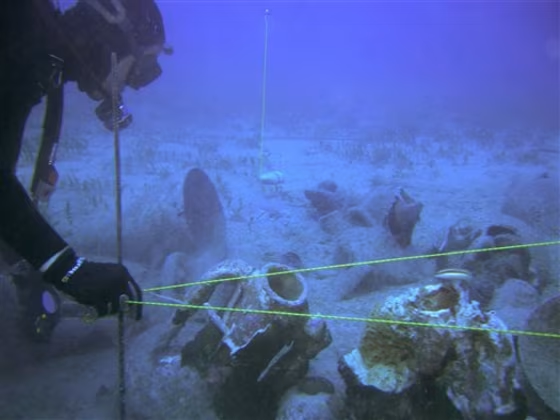
Marine archaeologists have salvaged ancient wine vases piled on the hull of a 2,350-year-old cargo ship lying on the seabed off Cyprus' southern shore, the Mediterranean island's Antiquities Department said Saturday.
The vessel is one of only a few such commercial ships dating from the late Classical period — the mid-fourth century B.C. — to have been discovered so well-preserved.
The ship rests under 150 feet of water some 1 1/2 miles from shore.
Divers last month brought to the surface only a few of the more than 500 amphorae — terra-cotta vases used in antiquity to ferry liquid and other foodstuffs — for more study.
They are of the type that carried red wine from the Aegean island of Chios, reputed to be the most expensive of classical antiquity, said a department statement released Friday.
"Apart from the Chian amphorae, which form the overwhelming majority, there are also other types from islands of the north Aegean," it said.
Many more amphorae are believed to lie underneath the sand-buried hull of the ship.

 FOR SUBSCRIBERSCBP leaders cut out of Trump ad buy decision









FOR SUBSCRIBERSA harrowing ordeal aboard an Israel-bound plane





Greater understanding
The department said the find is of "great importance" in helping scientists learn more about sea trade and commerce in the Aegean and east Mediterranean during the Classical period.
FOR SUBSCRIBERSCBP leaders cut out of Trump ad buy decision
FOR SUBSCRIBERSA harrowing ordeal aboard an Israel-bound plane
"The results of this study will shed light on the many problems of nautical and economic history," including commercial relations between the north Aegean and southeastern Mediterranean and how sea trade was organized, the statement said.
The department said this is the first marine archaeology research project conducted exclusively by Cypriot institutions.
Divers will start the next surveying phase in October. The project is being undertaken by the University of Cyprus' Archaeology Research Unit and is funded by the Thetis Foundation, a private institution that protects underwater cultural heritage.
The ship appears to be a contemporary of the famed Kyrenia, a 15-meter merchant vessel that another Greek Cypriot diver accidentally discovered off the island's northern coast more than four decades ago.