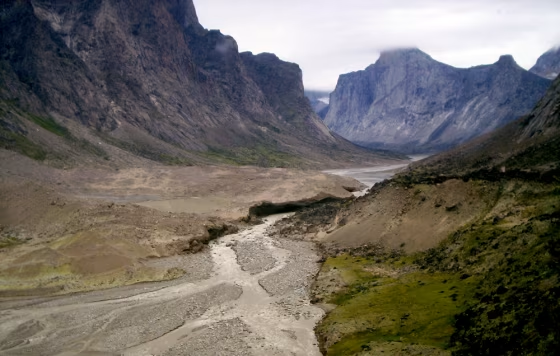
A major national park in Canada's Arctic has been largely closed after record high temperatures caused flooding that washed away hiking trails and forced the evacuation of tourists, an official said on Friday.
Every year around 500 people visit Auyuittuq National Park, which covers more than 7,300 square miles on Baffin Island and is dominated by the giant Penny ice cap. The park is popular with hikers and skiers.
The combination of floods, melting permafrost and erosion means that the southern part of the park will remain shut until geologists can examine the damage, said Pauline Scott, a spokeswoman for Parks Canada.
"We've lost huge proportions of what was formerly the trail in the park. It's disappeared — gone," Scott said by phone from Iqaluit, capital of the Arctic territory of Nunavut.
Most visitors walk through the park — which is slightly smaller in area than Israel — starting from the southern edge, near the town of Pangnirtung.
The problems started last month with two weeks of record temperatures on Baffin Island that reached as high as 81 Fahrenheit, well above the July average of 54 F.
That, Scott said, triggered massive melting that sent "a huge pulse of water through the park," washing away 37 miles of a trail used by hikers and destroying a bridge over a river that is otherwise impassable.
Earlier this week, once the extent of the damage had become clear, 21 visitors had to be evacuated by helicopter.
"We're not as worried about the flash flooding as we are about the instability of the ground and the slumping and the cracks appearing all along that entire" length of trail, said Scott.

 FOR SUBSCRIBERSCBP leaders cut out of Trump ad buy decision









FOR SUBSCRIBERSA harrowing ordeal aboard an Israel-bound plane





FOR SUBSCRIBERSCBP leaders cut out of Trump ad buy decision
FOR SUBSCRIBERSA harrowing ordeal aboard an Israel-bound plane
Temperatures in large parts of the Arctic have risen far faster than the global average in recent decades, a development that many experts say is linked to climate change.
Last week, giant sheets of ice totaling almost 8 square miles broke off an ice shelf in the Canadian Arctic and more might follow later this year, scientists said.
Scott said more problems could be in store for the park.
"We've had lots of hard rain in the south part of Baffin Island in the last five days so we don't know what this is doing to further destabilize melting permafrost, because this is what is causing the erosion," she said.
In June, the nearby town of Pangnirtung declared a state of emergency for three weeks after flash flooding cut off its water supply and sewage system.