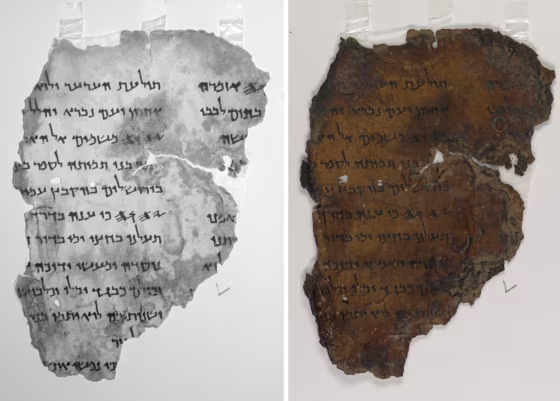
Scientists in Israel are taking digital photographs of the Dead Sea Scrolls with the aim of making the 2,000-year-old documents available to the public and researchers on the Internet.
Israel Antiquities Authority, the custodian of the scrolls that shed light on the life of Jews and early Christians at the time of Jesus, said on Wednesday it would take more than two years to complete the project.
For many years after Bedouin shepherds first came upon the scrolls in caves near the Dead Sea in 1947, only a small number of scholars were allowed to view the fragments.
But access has since been widened and they were published in their entirety seven years ago.
Using powerful cameras and lights that emit no damaging heat or ultraviolet beams, scientists in Israel have been able to decipher sections and letters in the scrolls invisible to the naked eye.
The scrolls, most of them on parchment, are the oldest copies of the Hebrew Bible and include secular text dating from the third century BC to the first century AD.







 FOR SUBSCRIBERSA harrowing ordeal aboard an Israel-bound plane







FOR SUBSCRIBERSThe debate over AI’s future rages on both coasts

A team of specialists has taken 4,000 pictures of some 9,000 fragments that make up the scrolls, which number 900 in total. A few large pieces of scroll are on permanent display at the Israel Museum.
FOR SUBSCRIBERSA harrowing ordeal aboard an Israel-bound plane
FOR SUBSCRIBERSThe debate over AI’s future rages on both coasts
"We are able to see the scrolls in such detail that no one has before," said Simon Tanner, a digital expert from King's College London, who is in charge of data collection.
Scientists hope the advanced imaging technology will also help them better preserve the scrolls by detecting any deterioration caused by humidity and heat.