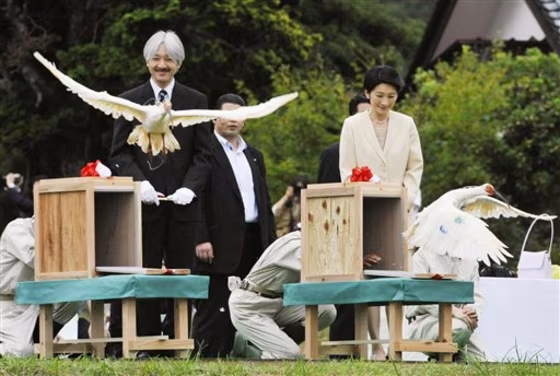
Ibises have returned to Japan for the first time since 1981 after researchers released 10 of the endangered birds Thursday.
The large white birds, some wearing small GPS devices on their backs for tracking, flew away from a crowd of cheering onlookers and headed for nearby rice paddies.
Red-faced, with pink-white feathers, a curved black beak and a floppy feathered crown, the crested ibis was once common in rice fields in Japan and across Asia, where it feasted on bugs and frogs.

 FOR SUBSCRIBERSCBP leaders cut out of Trump ad buy decision









FOR SUBSCRIBERSA harrowing ordeal aboard an Israel-bound plane





But the birds, a national treasure in Japan and long a favorite subject of scroll artists here, have almost disappeared because of hunting, pesticides and development. Japan's last native ibis died 27 years ago.
On Thursday morning, Prince Akishino was among the notables that freed the birds from wooden boxes at a ceremony held in the city of Sado, on a small island off of Japan's coast about 170 miles northwest of Tokyo.
FOR SUBSCRIBERSCBP leaders cut out of Trump ad buy decision
FOR SUBSCRIBERSA harrowing ordeal aboard an Israel-bound plane
The release was part of a government plan to introduce 60 ibises into the wild by 2015. Japanese authorities are breeding them in captivity at a bird center in Sado, using ibises provided by China.
In 1998, then-Chinese President Jiang Zemin presented the Sado center with a pair named Yo-Yo and Yang-Yang.
The birth of the couple's first chick in Japan a year later triggered a media frenzy, with TV stations airing hour-by-hour updates as it pecked through its shell.