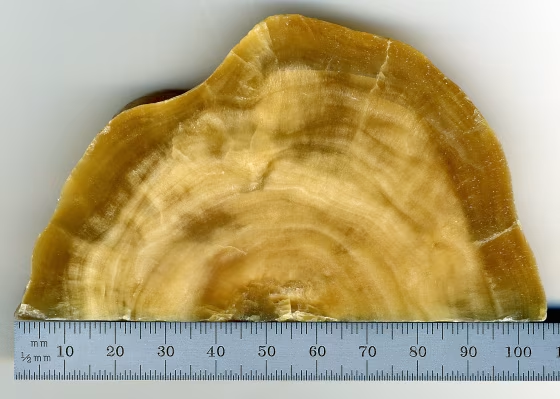
An analysis of rings on a stalagmite from a cave near Jerusalem reveals a drier climate in the region at a time in history when the Roman and Byzantine empires were in decline, scientists reported on Thursday.
University of Wisconsin geologists analyzed the chemical composition of individual rings as small as one-hundredth of a millimeter across that formed the stalagmite growing up from the floor of the Soreq Cave near Jerusalem between 200 B.C. and A.D. 1100.
Geologists John Valley and Ian Orland concluded the climate was drier in the eastern Mediterranean between the year 100 and 700, with steep drops in rainfall around 100 and 400 — a period of waning Roman and Byzantine power in the region.

 FOR SUBSCRIBERSCBP leaders cut out of Trump ad buy decision









FOR SUBSCRIBERSA harrowing ordeal aboard an Israel-bound plane





“Whether this is what weakened the Byzantines or not isn’t known, but it is an interesting correlation,” Valley said in a statement.
FOR SUBSCRIBERSCBP leaders cut out of Trump ad buy decision
FOR SUBSCRIBERSA harrowing ordeal aboard an Israel-bound plane
The team is now applying the same geochemical technique to examine older samples from the cave from the time of the last glacial retreat roughly 19,000 years ago, to help understand how weather patterns respond to fast-warming temperatures.
Researchers from the Geological Survey of Israel and Hebrew University in Jerusalem helped with the study, which was to appear in an upcoming issue of the journal Quaternary Research.