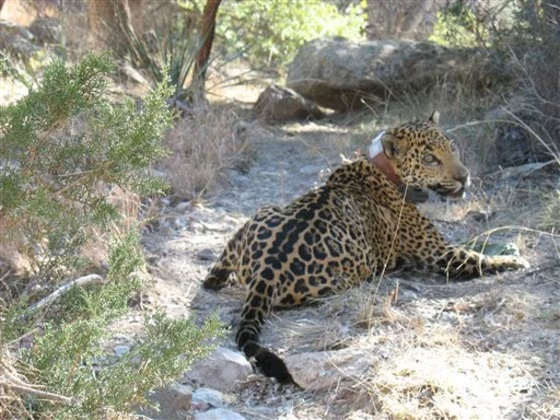
A rare jaguar that became gravely ill after it was accidentally caught in a snare had to be euthanized, state biologists reported.
The jaguar had been outfitted with a tracking collar less than two weeks earlier in the hopes of uncovering the elusive big cat’s secrets.
An Arizona Game and Fish Department team recaptured the animal southwest of Tucson on Monday because it appeared ill; they killed it later that day. Nicknamed Macho B, it was believed to be the oldest known jaguar in the wild at 15 or 16 years old.
“It was definitely a roller-coaster ride,” said Bill Van Pelt, a department program manager.
Long a ghostlike presence in Arizona, the jaguar had been captured only on environmentalists’ tracking cameras over the past dozen years.
Then, on Feb. 18, it became the first wild jaguar in the United States to be radio-collared after it was inadvertently caught in a snare trap set to study bears and mountain lions.
Jaguar slowed down
But transmissions from its GPS-equipped collar Friday indicated it was only moving a few hundred yards — far less than when he had been foraging, Fish and Wildlife spokesman Jeff Humphrey said.
A three-member team tried to get a visual sighting Saturday, and another tried to dart the jaguar on Sunday but missed. On Monday, wildlife biologists and a veterinarian were more successful, shooting the jaguar with an anesthetic dart from a helicopter about five miles from where it had been trapped.
Team members determined from tests at the Phoenix Zoo that the jaguar was in severe, unrecoverable kidney failure, Van Pelt said Tuesday.
In consultations with veterinarians, the U.S. Fish and Wildlife Service and the head of Arizona Game and Fish, “we felt it was in the best interest of the animal to put it down,” he said.
A veterinarian who treated the jaguar said it had had kidney disease, likely aggravated by the stress of being captured and tranquilized.
Species range has declined
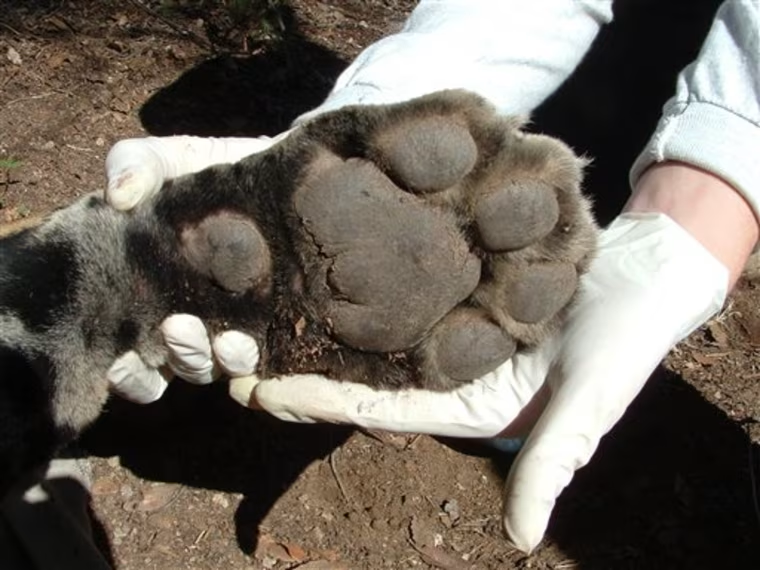
Little is known of the endangered jaguar’s habitat or ecology in this country. It once ranged from the Appalachians to the San Francisco Bay, but New Mexico and Arizona are now thought to be the northernmost reaches of a range extending into South America.
Scientists had hoped to learn more about the jaguar’s use of the borderland habitats to aid in conserving the species.







 FOR SUBSCRIBERSA harrowing ordeal aboard an Israel-bound plane







FOR SUBSCRIBERSThe debate over AI’s future rages on both coasts

FOR SUBSCRIBERSA harrowing ordeal aboard an Israel-bound plane
FOR SUBSCRIBERSThe debate over AI’s future rages on both coasts
“Was this male moving across the border? Did it rendezvous with other cats? How was it utilizing the habitat?” Humphrey said. “Would it seasonally use one group or one mountain or canyon versus another? Was it requiring a large territory?
“And unfortunately, 10 days and about five miles worth of data is about all we will have at this point.”