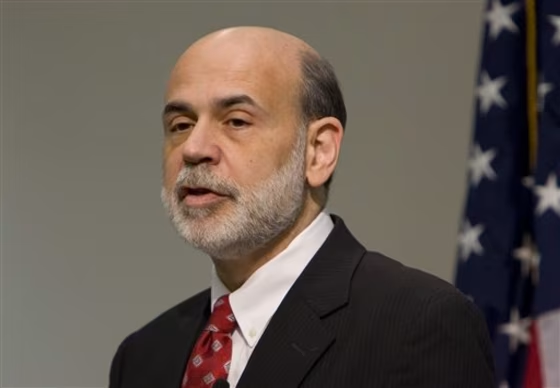
With the financial crisis deepening and public anger about bailouts growing, Federal Reserve Chairman Ben Bernanke is taking a rare step to get his message out: a TV interview.
Bernanke, in a taped interview with CBS' "60 Minutes," will discuss the financial crisis, the recession and what the Fed is doing to help fix them. The segment will air Sunday. It's rare for a sitting Fed chief to grant an interview — whether for broadcast or in print.
"Chairman Bernanke believed the invitation from `60 Minutes' presented a useful opportunity for the Federal Reserve to communicate broadly during this extraordinary economic time," Fed spokeswoman Michelle Smith said when asked about why Bernanke decided to do the interview.
Earlier this week, Treasury Secretary Timothy Geithner appeared on PBS' "The Charlie Rose Show," where he talked about the financial crisis and the Obama administration's efforts to provide relief.
The government has put billions of taxpayers' dollars at risk with bailouts of financial institutions. Those that have been thrown lifelines include American International Group Inc., Citigroup Inc., Bank of America Corp., mortgage giants Fannie Mae and Freddie Mac and others.
In Congress, the Fed has come under fire from both Republicans and Democrats for not being more open about its rescue operations, which are usually decided in closed-door deliberations.
Some lawmakers have demanded the Fed, among other things, identify the companies drawing emergency Fed loans or other assistance. Bernanke has resisted, saying such public information could cause a run on the financial institution or erode confidence in it, defeating the purpose of the Fed's programs.







 FOR SUBSCRIBERSA harrowing ordeal aboard an Israel-bound plane







FOR SUBSCRIBERSThe debate over AI’s future rages on both coasts

In the past few weeks, Bernanke has warned, in appearances on Capitol Hill and in speeches, that financial markets need to be bolstered before any economic recovery will take hold.
FOR SUBSCRIBERSA harrowing ordeal aboard an Israel-bound plane
FOR SUBSCRIBERSThe debate over AI’s future rages on both coasts
And Bernanke said this week that the nation's financial rule book must be rewritten to prevent a repeat of the economic crisis gripping the United States and other countries.
He offered new details on how to bolster mutual funds and a program that insures bank deposits. He also stressed the need for regulators to make sure financial companies have a sufficient capital cushion against potential losses.
And he called on Congress to set up a system to handle the collapse of a major financial institution, to minimize any financial damage.