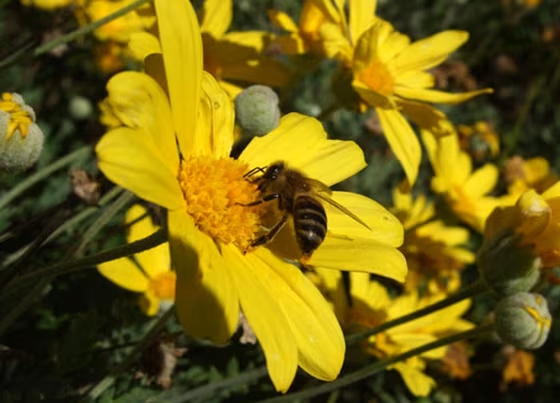
A person changing jobs at mid-life might wish for a redesigned brain up to the fresh task. Honeybees go through just such a metamorphosis, a new study finds.
The research adds to an impressive list of bee qualities, including the recent discovery that bees can count.
Female worker bees begin adult life working in the hive, doing such things as taking care of the baby bees. By around 2-3 weeks of age, however — roughly equivalent to middle age in human years — they make a major career change, switching to foraging for nectar and pollen.

 FOR SUBSCRIBERSCBP leaders cut out of Trump ad buy decision









FOR SUBSCRIBERSA harrowing ordeal aboard an Israel-bound plane





(The queen, meanwhile, lounges around and mates with up to 20 males.)
Anyway, foraging requires new skills. A middle-age bee must now navigate to and from feeding sites and communicate the location of food to other bees (sometimes with a fantastic waggle). And she becomes a frequent flier, racking up hundreds of miles in the remainder of her short life.
FOR SUBSCRIBERSCBP leaders cut out of Trump ad buy decision
FOR SUBSCRIBERSA harrowing ordeal aboard an Israel-bound plane
Researchers from Brazil and Cuba analyzed hundreds of bee brains, comparing proteins produced at the direction of genes in nurses vs. foragers.
The brains of nurse bees have higher levels of proteins involved in caste determination in the complex society of these insects. The brains of experienced foragers, on the other hand, have more proteins linked to other vital activities, such as energy production. Their proteomes (the set of proteins expressed by their genes) are quite different, the scientists conclude.
"Our study demonstrated clear brain proteome differences between honey bee nurse and forager subcastes with distinct social roles," the researchers write in the Journal of Proteome Research, a publication of the American Chemical Society.