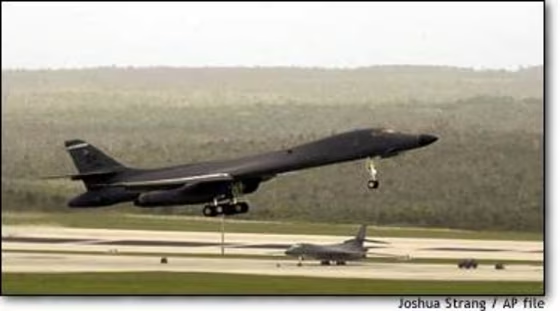
The B-1B is the last of its kind: a long-ranged, heavy bomber designed to penetrate the radar defense of the Soviet Union and bring Armageddon home to America’s Cold War enemy. The end of the Cold War might have seen the small fleet of B-1Bs built in the 1980s headed for mothballs. But, in fact, the bomber has found a new role for itself, carrying huge bomb loads over long distances to conduct dangerous, low-level runs against airfields, enemy troops or other large targets.
THE B-1B originally was meant to replace the B-52, a 1950s era bomber still in service. Designed by Boeing during the height of the Cold War, the B-1 was cancelled in the late 1970s after cost-overruns and advances in missile technology appeared to make them expendable.
But the Reagan administration revived the program in the 1980s, and today the aircraft holds several world records for speed, maneuverability and endurance.

 FOR SUBSCRIBERSCBP leaders cut out of Trump ad buy decision









FOR SUBSCRIBERSA harrowing ordeal aboard an Israel-bound plane





Lt. Gen. Michael Short, a retired air force commander and NBC News analyst, says the B-1B “will be used to drop dumb bombs in large quantities and to carry a lot of weapons since it can be in the target area for a long time.”
The B-1B’s electronic blocking equipment, infrared counter-measures, radar locations and warning systems form a defense system for the aircraft.
FOR SUBSCRIBERSCBP leaders cut out of Trump ad buy decision
FOR SUBSCRIBERSA harrowing ordeal aboard an Israel-bound plane
While not a “stealth” aircraft, according to the Air Force website, the B-1B has a low-radar cross-section that come from a combination of aircraft structure and radar-absorption materials.
The B-1B’s combat debut came during the 1998 “Desert Fox” airstrikes that followed the United Nation’s abandonment of the UNSCOM inspection system in Iraq. The aircraft saw even more extensive use in Afghanistan.