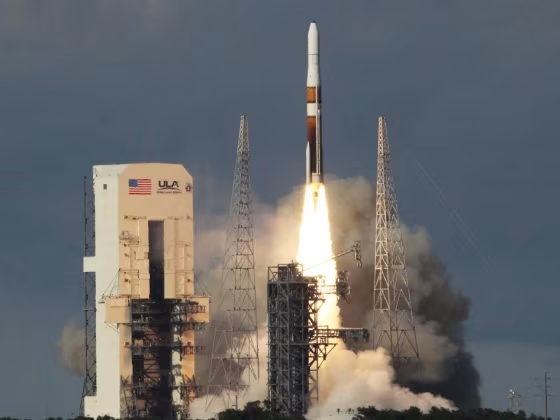
A sophisticated new weather satellite rocketed into orbit Saturday, giving forecasters another powerful tool for tracking hurricanes and tornadoes.
An unmanned rocket carrying the nation's latest Geostationary Operational Environmental Satellite blasted off early Saturday evening, a day late because of thunderstorms. The satellite headed toward a 22,000-mile-high orbit, where it will undergo six months of testing. It will circle Earth as a spare and be called into service when needed.
The GOES satellite network provides continuous weather monitoring for 60 percent of the planet, including the United States. The newer ones also monitor solar flares that can disrupt communications on Earth, and track climate change.







 FOR SUBSCRIBERSA harrowing ordeal aboard an Israel-bound plane







FOR SUBSCRIBERSThe debate over AI’s future rages on both coasts

This is the second of the more advanced GOES satellites to be launched, containing sensors capable of providing better location data and higher-resolution pictures of storms.
"These are probably about the most sophisticated weather satellites that we actually have on this planet ... off this planet," said Andre Dress, deputy project manager for NASA.
FOR SUBSCRIBERSA harrowing ordeal aboard an Israel-bound plane
FOR SUBSCRIBERSThe debate over AI’s future rages on both coasts
NASA manages the development and launch of GOES satellites for the National Oceanic and Atmospheric Administration. The one launched Saturday, GOES-O, will be renamed GOES 14 once it reaches its proper orbit in one and a half weeks.
The mission cost $499 million, including the cost of the Delta 4 rocket.