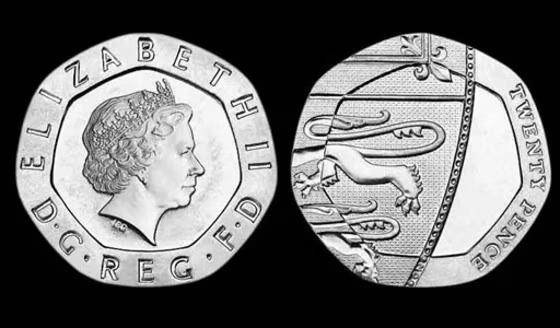
Next time you're in Britain, check your change.
The Royal Mint admits it's made a rare error, producing coins without a date on them for the first time in centuries.
The mint said Monday that at least 100,000 of the year-less 20-pence coins, normally worth 33 U.S. cents at face value, slipped into circulation at the end of last year. If found, one coin would garner hundreds of times more on the collectors' market.
Numismatists say the last time the Royal Mint accidentally left out the year on a coin was in 1672.
The latest error happened when the Royal Mint issued a new design of the coin that moved the year from the back side to the one that bears the head of Queen Elizabeth II. But mint spokesman Jadon Raj said one batch that didn't add "2008" to the head's side got through quality control.
Raj said the mint couldn't issue a recall because the coins are legal to use.







 FOR SUBSCRIBERSA harrowing ordeal aboard an Israel-bound plane







FOR SUBSCRIBERSThe debate over AI’s future rages on both coasts

"As far as were concerned their face value is 20 pence, so there isn't an issue for us," he said.
FOR SUBSCRIBERSA harrowing ordeal aboard an Israel-bound plane
FOR SUBSCRIBERSThe debate over AI’s future rages on both coasts
The mint admitted the mistake after a private British company called the London Mint Office launched a promotion Monday offering to pay $83 per coin. Market experts noted that the coins already have been quietly selling to online collectors for up to six times higher.
The mint's last major error, in 1983, involved the production of 2-pence coins that accidentally said "new pence" instead of "two pence."