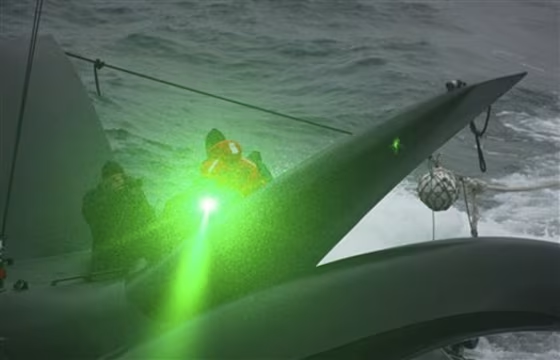
Japanese whalers and militant conservationists have clashed in the Antarctic Ocean over two days, with weapons including water cannon, blinding lasers and bottles of rancid acid, both sides said Wednesday.
Each accused the other of coming dangerously close during the clashes. Neither reported any injuries or ship damage.
The New Zealand-registered Sea Shepherd Conservation Society ship Ady Gil came within 66 feet of colliding with the bow of Japanese harpoon ship Sonan Maru No. 2 on Wednesday, the Japanese government-sponsored Institute of Cetacean Research said in a statement.
The activists tried to blind the Japanese crew with lasers and "fired ball-like projectiles with a projectile-launching device" during an attack that lasted 3.5 hours, the statement said.
Sea Shepherd accused the Japanese of using crowd-control sound technology known as a Long Range Acoustic Devices, or LRADs, as well as water cannon against the Ady Gil crew. The activists said they responded with lasers to get the Japanese to back off to a safe distance.
The Japanese said the attack on Wednesday was more dangerous than a confrontation late Tuesday between the same whaling ship and Sea Shepherd's Netherlands-registered flag ship Steve Irwin.
The Japanese accuse both Sea Shepherd ships of trailing ropes in failed bids to entangle the whaler's rudder and propeller.
The whalers also accused the Steve Irwin crew of hurling bottles of butyric acid — a rancid liquid that occurs in spoiled butter — during a two-hour conflict on Tuesday.
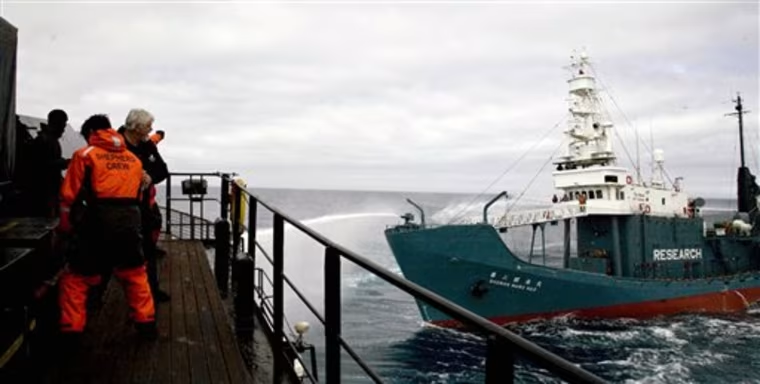
Sea Shepherd makes an annual attempt to stop Japanese whalers from harpooning hundreds of whales during the southern hemisphere summer, which began this month.
The first clash of the current whaling season happened Dec. 14 when the Steve Irwin and Sonan Maru No. 2 exchanged water cannon fire.
Japan's whale hunts are allowed under international rules as a research program, despite a 1986 ban on commercial whaling. Whale meat not used for study is sold for consumption in Japan, which critics say is the real reason for the hunts.







 FOR SUBSCRIBERSA harrowing ordeal aboard an Israel-bound plane







FOR SUBSCRIBERSThe debate over AI’s future rages on both coasts

FOR SUBSCRIBERSA harrowing ordeal aboard an Israel-bound plane