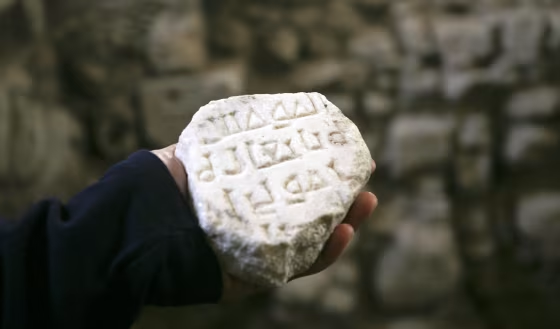
A home renovation in Jerusalem's Old City has yielded a rare Arabic inscription offering insight into the city's history under Muslim rule, Israeli archaeologists said Wednesday.
The fragment of a 1,100-year-old plaque is thought to have been made by an army veteran to express his thanks for a land grant from the Caliph al-Muqtadir, whom the inscription calls "Emir of the Faithful."
Dating from a time when Jerusalem was ruled from Baghdad by the Abbasid empire, the plaque shows how rulers rewarded their troops and ensured their loyalty, archaeologists said.
The Abbasids conquered Jerusalem after numerous wars with the Fatimid empire in Egypt. The Abbasid caliphs valued Jerusalem as an Islamic holy site.
"The caliph probably granted estates as part of his effort to strengthen his hold over the territories within his control, including Jerusalem, just as other rulers did in different periods," said excavation director Annette Nagar.
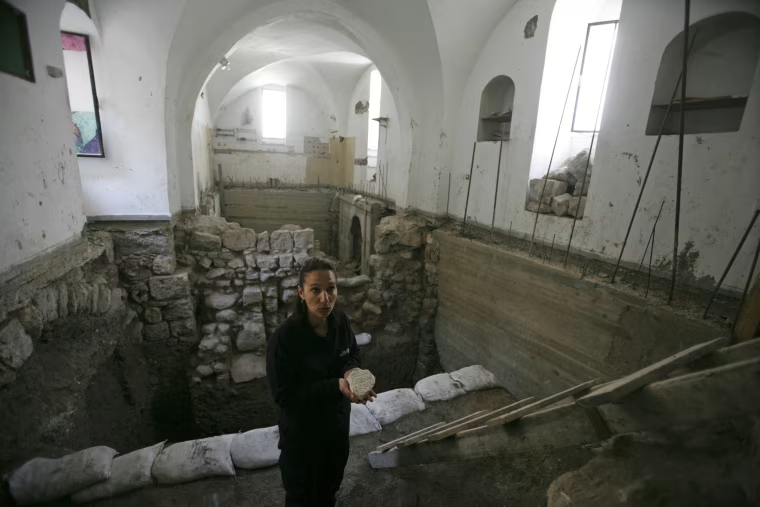
The white marble plaque measures four inches by four inches and was found approximately 5 feet beneath the floor of a home in the Old City's Jewish Quarter.
The house's owner planned a renovation and — as required by law — brought archaeologists to carry out a salvage dig meant to prevent harm to valuable antiquities. The plaque has been removed from the site and is now in the hands of Israel's Antiquities Authority.







 FOR SUBSCRIBERSA harrowing ordeal aboard an Israel-bound plane







FOR SUBSCRIBERSThe debate over AI’s future rages on both coasts

FOR SUBSCRIBERSA harrowing ordeal aboard an Israel-bound plane
FOR SUBSCRIBERSThe debate over AI’s future rages on both coasts
The writing was deciphered by Hebrew University professor Moshe Sharon, who traced it to 910, during the early part of al-Muqtadir's 24-year rule.
The finding will help scholars better understand 10th-century Jerusalem, populated by Muslims, Christians and Jews, and the methods used by Muslim rulers to solidify their control.