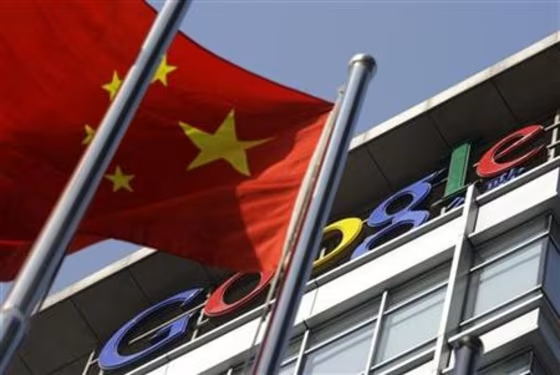
More than three-quarters of scientists in China use the search engine Google as a primary research tool and say their work would be significantly hampered if they were to lose it, a survey showed on Wednesday.
Google's future in the country is uncertain following a row with Beijing, but Chinese scientists asked by the Nature journal how much they rely on Google said it was vital for finding academic papers, information about discoveries or other research programs and finding scholarly literature.
"Research without Google would be like life without electricity," one Chinese scientist said in the survey, which asked more than 700 scientists for their views.
Google, the world's top search engine, said in January it had uncovered sophisticated China-based attacks on human rights activists using its Gmail service around the world.
Google said other firms had also been affected, and after checks into the attacks, the company had decided it was no longer willing to tolerate censorship on its Google.cn search engine. Google also threatened to shut its China offices.
In the survey, 84 percent said losing Google would "somewhat or significantly" hamper their research and 78 percent said international collaborations would be affected.







 FOR SUBSCRIBERSA harrowing ordeal aboard an Israel-bound plane







FOR SUBSCRIBERSThe debate over AI’s future rages on both coasts

"The findings are very typical of most countries in the world," says David Bousfield, an analyst at Outsell, an information and publishing consultancy. "Google and Google Scholar have become indispensable tools for scientists.
FOR SUBSCRIBERSA harrowing ordeal aboard an Israel-bound plane
FOR SUBSCRIBERSThe debate over AI’s future rages on both coasts
David Nicholas, an Internet researcher in London, said science in China would not come to a halt without Google, but the search engine had "has transformed information-seeking behaviors in academic communities."
Losing such an important research tool would significantly compromise scientists efficiency, he said in a comment in Nature.