A big study finds that people with narrowed neck arteries that could lead to a stroke can be safely treated with a less drastic option than the surgery done now.
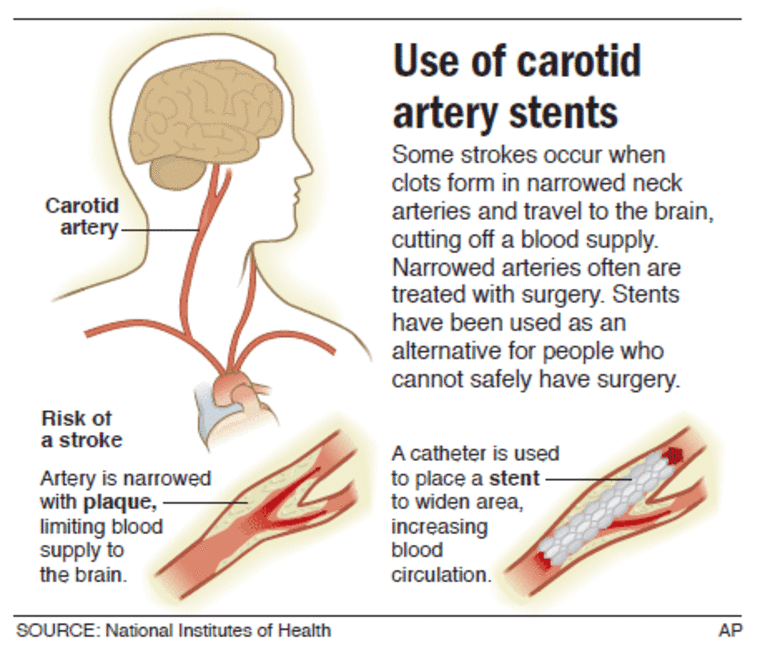
Doctors say that hundreds of thousands of Americans a year might be able to have an artery-opening procedure and a stent instead of surgery to remove built-up plaque. A stent is a mesh tube that props the blood vessel open.
Stents have long been used to fix heart arteries but are approved for use in the neck only for people too sick for surgery. The new study, in people with less severe disease, suggests stents will find much wider use.
"The sea of people is gigantic" who could benefit, said Dr. Walter Koroshetz, deputy director of the National Institute of Neurological Disorders and Stroke, the study's main sponsor.
"We now have two safe and effective methods" to treat neck vessels, said Dr. Thomas Brott of the Mayo Clinic in Jacksonville, Fla. He led the study and gave results Friday at an American Stroke Association conference.
The treatments have different complications, though. Strokes were more of a problem after stents, while heart attacks were more common in people given surgery. Which risks a patient chooses to take may depend on their general health, and how badly they want to avoid undergoing surgery, doctors say. A big factor will be whether Medicare decides to cover stents for this purpose.
The study enrolled 2,502 patients in the United States and Canada. Half had recent symptoms such as a mini stroke. The rest had no symptoms but significantly narrowed neck arteries. They were given either surgery or a stent.
A month later, about 4 percent of the stent group had suffered strokes versus 2 percent of those who had surgery. About 2 percent of the surgery group had heart attacks compared to 1 percent of those given stents. The overall rate of major complications did not differ between the groups.







 FOR SUBSCRIBERSA harrowing ordeal aboard an Israel-bound plane







FOR SUBSCRIBERSThe debate over AI’s future rages on both coasts

FOR SUBSCRIBERSA harrowing ordeal aboard an Israel-bound plane