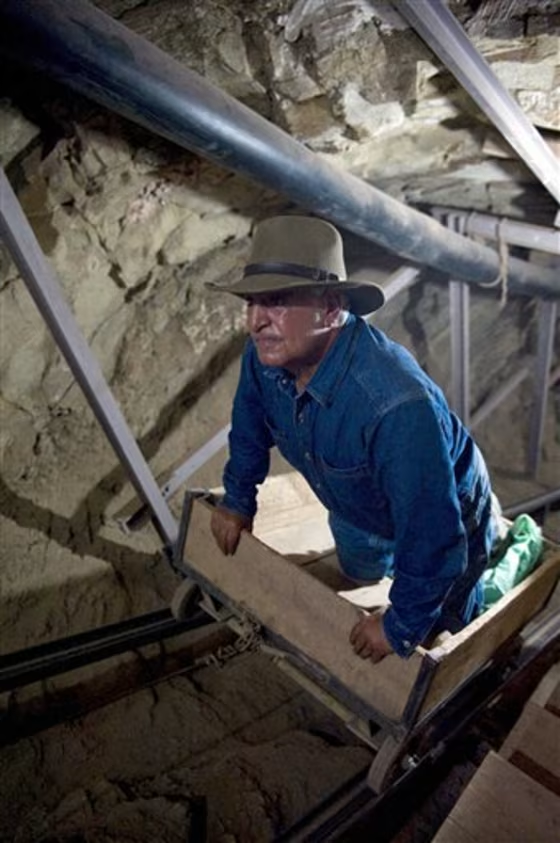
Egyptian archaeologists who have completed excavations on an unfinished ancient tunnel believe it was meant to connect a 3,300-year-old pharaoh's tomb with a secret burial site, the antiquities department said Wednesday.
Egyptian chief archaeologist Zahi Hawass said it has taken three years to excavate the 570-foot-long (174-meter-long) tunnel in Pharaoh Seti I's ornate tomb in southern Egypt's Valley of the Kings. The pharaoh died before the project was finished.
First discovered in 1960, the tunnel has only now been completely cleared. Archaeologists discovered ancient figurines, shards of pottery and instructions left by the architect for the workmen.







 FOR SUBSCRIBERSA harrowing ordeal aboard an Israel-bound plane







FOR SUBSCRIBERSThe debate over AI’s future rages on both coasts

"Move the door jamb up and make the passage wider," read an inscription on a decorative false door in the passage. It was written in hieratic, a simplified cursive version of hieroglyphics.
Elsewhere in the tunnel there were preliminary sketches of planned decorations, said Hawass.
FOR SUBSCRIBERSA harrowing ordeal aboard an Israel-bound plane
FOR SUBSCRIBERSThe debate over AI’s future rages on both coasts
Pharaoh Seti I (1314-1304 B.C.) was one of the founders of the New Kingdom's 19th Dynasty, known for its military exploits and considered the peak of ancient Egyptian power. His tomb is famous for its colorful wall paintings.
Seti's son Ramses II built grandiose temples and statues of himself all over Egypt.
Hawass speculated that the tunnel and secret tomb were not finished because of the pharoah's death, but may have inspired a similar structure in Ramses II's tomb.