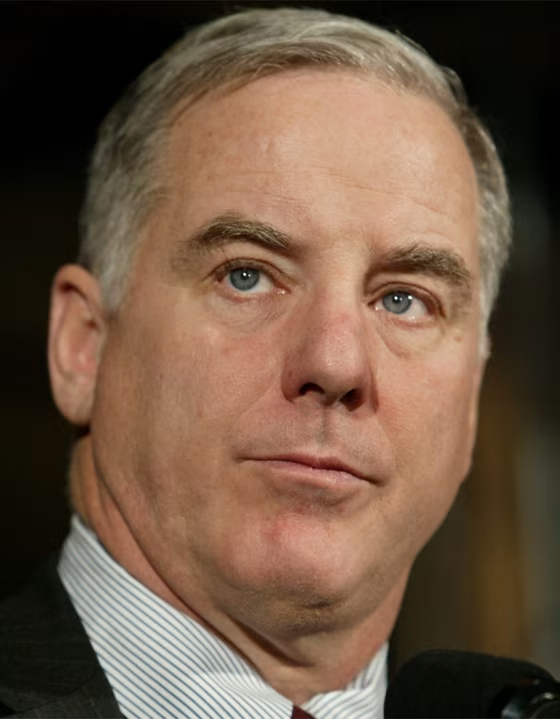
Democratic presidential contender Howard Dean said on Friday that he thought Alan Greenspan had become too political and should be replaced as chairman of the U.S. Federal Reserve.
"I think Alan Greenspan has become too political. If he lacks the political courage to criticize the deficits, if he was foolish enough -- and he's not a foolish man -- to support the outrageous tax cuts that George Bush put through, then he has become too political and we need a new chairman of the Federal Reserve," Dean said in response to a question from an audience at a town hall meeting in Londonderry.
He said he thought the Fed had done a "terrific job" and that it was "absolutely critical" to make sure it remained independent.
Although the Fed chief in 2001 backed the notion of tax cuts, Greenspan has in the past warned of the dangers of high budget deficits.
President George W. Bush's tax cuts -- which the administration is now pressing to make permanent -- and an economic slowdown helped fuel a record $374 billion budget gap last year, or about 3.5 percent of U.S. gross domestic product (GDP), the highest proportion since 1993. The White House expects even larger deficits this year that will hit about 4.5 percent of GDP.
In a book about Paul O'Neill's tenure as Treasury secretary, Greenspan was quoted as saying Bush's 2001 tax cuts -- if implemented without "triggers" to cancel them if budget deficits swelled -- would be "irresponsible fiscal policy."

 FOR SUBSCRIBERSCBP leaders cut out of Trump ad buy decision









FOR SUBSCRIBERSA harrowing ordeal aboard an Israel-bound plane





However, a Fed spokesman last week said Greenspan has denied saying this. He has, however, raised the issue of triggers in the past.
FOR SUBSCRIBERSCBP leaders cut out of Trump ad buy decision
FOR SUBSCRIBERSA harrowing ordeal aboard an Israel-bound plane
"In recognition of the uncertainties in the economic and budget outlook, it is important that any long-term tax plan or spending initiative ... be phased in," Greenspan said in testimony on Feb. 13, 2001, a time when government forecasts envisioned mounting budget surpluses for years to come.
"Conceivably, it could include provisions that in some way would limit surplus-reducing actions if specified targets for the budget surplus and federal debt were not satisfied," he added.