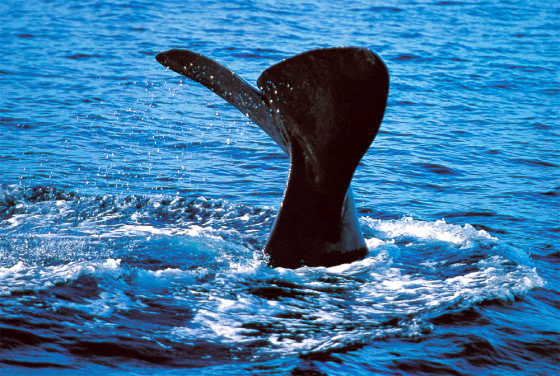
Sperm whales have the largest brain of any animal and some in the Gulf of Alaska are proving it at mealtimes: letting humans do all the work.
Researchers are now investigating what commercial fisherman have long noticed, that the whales have learned to pluck sablefish off hooks attached to their long fishing lines.
"They somehow just pick them off like grapes," said fisherman Dick Curran, who has fished the gulf’s deep waters for decades. "I don’t know how they do it."
No one knows how the whales have come to target sablefish, also called black cod, whose oily, rich flesh has become a lucrative product in Japanese markets. So a coalition of commercial fishermen and biologists has begun to investigate with about $200,000 from the North Pacific Research Board.
"We don’t want the fishermen to have an economic loss. Plus it’s a biological loss, because we don’t know how many sablefish are being taken," said whale specialist Jan Straley, a lead investigator in the project. "My interest is biological, and I really want to understand what these whales are doing."
To harvest black cod, fishermen sink a 2-mile-long line with baited hooks every 3 to 6 feet. Each end is anchored to the sea floor along the continental slope and buoyed at the surface. After an 8- to 12-hour "soak," fishermen haul the line, sometimes harvesting hundreds of sablefish in a single set.
Over the past few decades, some of the gulf sperm whales apparently realized that fishermen were bringing this deep food source to the surface, and learned to remove a 20- to 30-inch fish from hooks.
















"No one likes to get fewer fish, but take one look at those big whales and you realize you’re out of your league," said longliner Dan Falvey, who, along with Curran, is one of 10 fishermen working with Straley.
Sperm whales find prey with their extraordinary hearing, able to perceive their environment with echoed clicks and other sounds. The whales have yet to get seriously hurt or entangled in the sablefish gear, according to fishery managers and whale biologists.
Straley and her partners have found after one season suggests that male sperm whales may patrol the edge of the continental shelf, where the water is 1,200 to 3,000 feet deep, and wait for fishing boats.
"For sure they know the sound of hydraulics engaging. ... It’s like ringing the dinner bell for them," said Linda Behnken, director of the Alaska Longline Fishermen’s Association, which is coordinating the study.
"Everyone knows whales are smart, and they’re proving it," she added.