
The Spirit rover shattered a one-day distance record on Mars, rolling nearly 70 feet across the planet’s rocky surface, NASA said Tuesday.
The drive covered more than three times the greatest distance that NASA’s tiny Sojourner rover ever traveled in a day on its own 1997 mission to Mars, mission manager Jim Erickson said.
“The basic goal was to drive as far as they could and see how things went in the time that they had,” Erickson said of the drive, which ended late Monday without any problems.
Spirit drove “blind” about half the distance, following a planned route to a stopping point. For the second half of the short trip, the rover drove to a second stopping point, autonomously executed a turn, and then rolled onward before stopping, Erickson said.
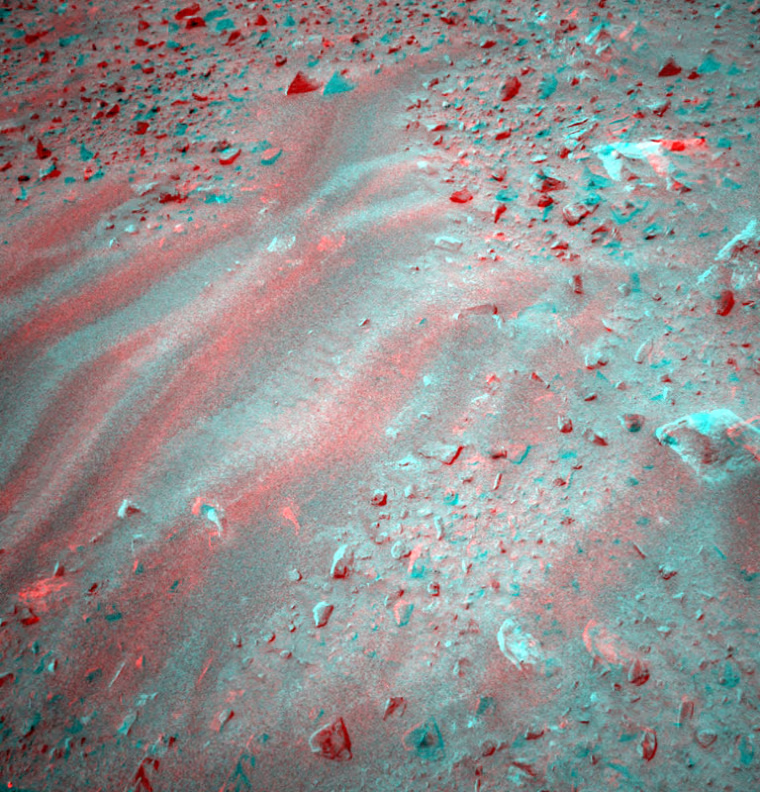
“Everything seemed to go fine there. Tomorrow’s plan is further driving. The day after that is driving even further,” Erickson told reporters by telephone.
NASA has sent Spirit toward a crater nicknamed “Bonneville” that sits about 800 feet from where the spacecraft landed. NASA hopes the six-wheeled rover eventually will cover as much as 140 feet a day, Erickson said.

 FOR SUBSCRIBERSCBP leaders cut out of Trump ad buy decision









FOR SUBSCRIBERSA harrowing ordeal aboard an Israel-bound plane





FOR SUBSCRIBERSCBP leaders cut out of Trump ad buy decision
FOR SUBSCRIBERSA harrowing ordeal aboard an Israel-bound plane
Spirit’s twin, Opportunity, also was on the move at its landing site, halfway around the planet.
Opportunity continued to “scoot and shoot” along an outcrop, driving along the rock formation while taking detailed pictures of the finely layered rocks. Initial results suggest the rocks formed from volcanic ash or compacted, windblown dust.
NASA sent the pair of rovers on an $820 million mission to look for geologic evidence that Mars was once a wetter place that might have been hospitable to life.