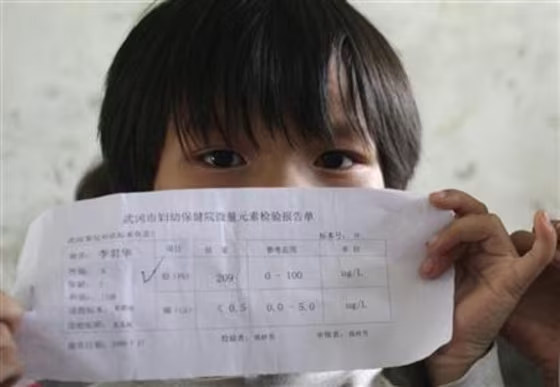
Chinese children suffering lead poisoning from polluting smelters and factories have been denied testing, effective treatment and even basic information by officials who downplayed health threats, a human rights advocacy group said on Wednesday.
The report from Human Rights Watch comes after China's latest lead pollution outbreak, when 103 children and scores of adults were poisoned by tinfoil-making workshops in eastern Zhejiang province.
Beijing has vowed to clean up this chronic pollution, but New York-based Human Rights Watch said those efforts only go so far in addressing the needs of hundreds of thousands of children it says are suffering from lead poisoning in China.
Lead, especially harmful for children, can lead to learning difficulties and behavioral problems, and often parents who work at the plants bring home extra doses on their clothes and skin.
"I want to know how sick my son is, but I can't trust the local test results," one mother from Hunan province in southern China told investigators, according to the report.
Citizens who complain about the problem face pressure, the rights watchdog said, citing dozens of interviews with parents in areas afflicted by pollution.
"Parents, journalists, and community activists who dare to speak out about lead are detained, harassed, and ultimately silenced," Joe Amon, health and human rights director at Human Rights Watch, said in a statement released with the report.







 FOR SUBSCRIBERSA harrowing ordeal aboard an Israel-bound plane







FOR SUBSCRIBERSThe debate over AI’s future rages on both coasts

Rapid industrial growth in China has increased citizens' worries about their health, especially where towns and villages located next to poorly regulated factories and workshops have been stricken by pollution problems.
China is the world's biggest consumer of refined lead, and battery making accounts for 70 percent of that consumption, which is likely to grow to 4.1 million tonnes in 2011.
China's environment ministry has promised to tackle heavy metal poisoning as widespread cases have sparked public anger and protests.
Three-quarters of lead-acid battery manufacturing plants in China could be phased out in the next two to three years, an industry body said last month.
FOR SUBSCRIBERSA harrowing ordeal aboard an Israel-bound plane
FOR SUBSCRIBERSThe debate over AI’s future rages on both coasts
Despite those vows, leaders in Beijing have struggled to rein in local officials who put jobs and economic growth ahead of environmental protection.
Based on 52 interviews, Human Rights Watch found that local governments denied the scope of potential poisoning and issued misleading information about the dangers of living close to polluting factories.
Parents were often told that drinking milk or eating garlic and eggs was adequate treatment for lead poisoning, the advocacy group said.
"The doctor told us all the children in this village have lead poisoning. Then they told us a few months later that all the children are healthy. They wouldn't let us see the results from the tests though," said a parent from Yunnan province quoted in the report.
"The government doesn't want to have to give us anything so they make up the results," another parent from Henan province said.
Lead poisoning can build up through regular exposure to small amounts, damaging the nervous and reproductive systems and kidneys, as well as causing high blood pressure and anemia.
"In villages where lead exposure is highest, a generation of cognitively and physically disabled children will need significant and ongoing support," the report said.
The group compared the corruption and cover-up of nationwide lead poisoning cases to the high-profile AIDS and SARs scandals that shattered international confidence in China's public health administration in the 1990s and early 2000s.
"The response to lead poisoning has so far followed this same road, but it is not too late for the Chinese government to take a different approach," the report said.