Sexual assault cases rank among the most difficult to prosecute, as the one against ex-IMF chief Dominique Strauss-Kahn is demonstrating. Held under house arrest since being charged with sexual assault of a maid at a New York hotel, the French politician was released on his own recognizance Friday amid questions about his accuser’s credibility.
The “he said, she said” nature of such cases is one complicating factor (as is getting victims to report sexual assaults in the first place). But so are prosecutorial zeal, power politics, personal troubles of accusers, and even false accusation. Here are five high-profile sex-crime cases that fell apart, in which one or more of those factors played a role.
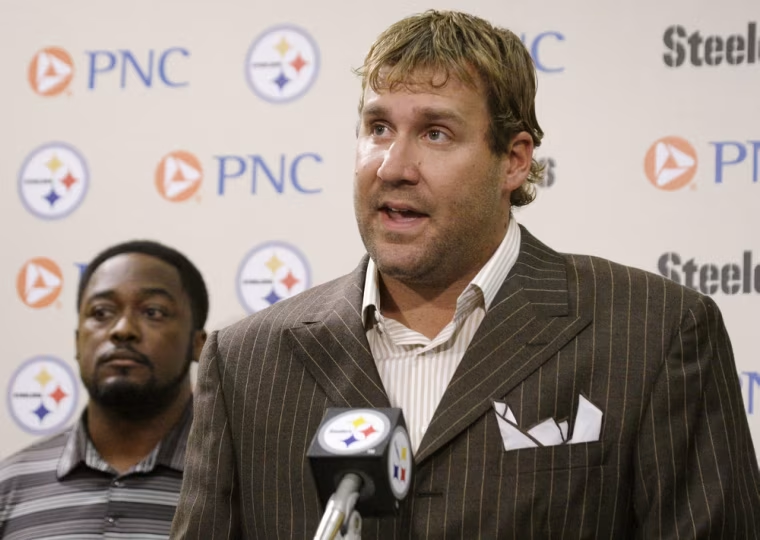
1. NFL quarterback Ben Roethlisberger case
Pittsburgh Steelers quarterback Ben Roethlisberger's reputation as an off-season party boy darkened last summer when a woman claimed the two-time Super Bowl champ had raped her in a bathroom stall at a nightclub in Milledgeville, Ga., during a night of raucous drinking.

 FOR SUBSCRIBERSCBP leaders cut out of Trump ad buy decision








FOR SUBSCRIBERSA harrowing ordeal aboard an Israel-bound plane





FOR SUBSCRIBERSCBP leaders cut out of Trump ad buy decision
FOR SUBSCRIBERSA harrowing ordeal aboard an Israel-bound plane
Roethlisberger, who had fended off another rape accusation by a Las Vegas casino employee in 2009, maintained that he had done nothing wrong. Local prosecutors agreed.
The district attorney cited the accuser's varying accounts and the lack of conclusive physical evidence as reasons Roethlisberger was not charged. The alleged victim continued to insist that a rape did occur.
The case raised troubling questions about at least one officer's actions that night. Milledgeville Sgt. Jerry Blash resigned under pressure for making derogatory comments about the woman to Roethlisberger less than an hour after she had reported being assaulted.
"In a March 15 interview with FBI Special Agent Ryan Carmichael," writes the Atlanta Journal-Constitution, "Blash indicated that he was mad because the alleged victim was not being 'straight up' with him. The former sergeant said the victim was very 'nonchalant' about her allegations."
Roethlisberger did not emerge unscathed, however. The NFL suspended him for six games in 2010.
2. Heidi Jones's phantom attacker
Heidi Jones, WABC-TV weekend weather anchor in New York and an occasional host on “Good Morning America,” reported to police in November that she had been harassed by a man near her apartment – and that he had tried to rape her two months earlier as she was out on a run through Central Park.
But police, during their investigation, turned up nothing on video footage during the days in question. They could find no other evidence to support her charges.
Confronted with the dearth of evidence, Ms. Jones acknowledged having fabricated the whole episode, police said.
No one was charged in the case … except Jones herself. She is charged with filing a false police report, a misdemeanor, and her case is still pending.
Why the lie? Jones said she was looking for “a plea of sympathy to counter some unknown setback that she was experiencing in her personal life,” reported the New York Post in December.
3. Hofstra University gang-rape case
An 18-year-old Hofstra University freshman accused five men, including another Hofstra student, of gang-raping her after a campus party in Hempstead, N.Y., in September 2009.
Four of the men were charged and a fifth was about to be arrested after the woman told police she was lured to a dormitory after a dance party. She said she was bound with rope while the five men took turns sexually assaulting her in a stall in the men's bathroom.
Then a grainy and explicit cellphone video of the incident emerged, showing the sex was consensual. The woman recanted her story after the prosecutor asked her: “If there is a video, and I get that video, it's going to show me that what you're saying is true?”
The charges were dropped. “Her actions and demeanor depict a very troubled young woman in need of much help," prosecutor Madeline Singas said later.
"The men did nothing illegal, but that doesn't make the behavior any less despicable," wrote Newsday columnist Joye Brown about the case. At the same time, "one woman's lie could have sent five innocent young men to state prison for up to 25 years."
4. The Duke lacrosse case
In March 2006, student athletes on Duke University’s lacrosse team put on a party that none would ever forget – for all the wrong reasons. After the party, hired exotic dancer Crystal Mangum accused three of the lacrosse players of rape.
The case became a sensation, tapping Americans’ anxieties about race and class. The students were wealthy, white, and attended a prestigious university. Ms. Mangum was poor, black, and enrolled at a traditionally African-American college. There was what North Carolina’s attorney general would later call “a tragic rush to accuse.”
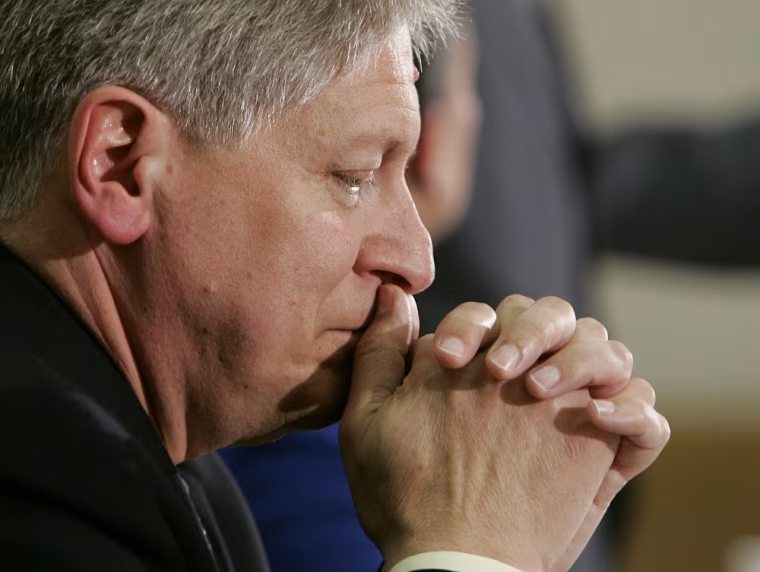
The players were charged on the basis of Mangum’s story. They certainly had behaved badly. One team member sent an e-mail that referenced killing the strippers he had hired for the party. But the problem was Magnum’s account wasn’t true. By April 2007, Attorney General Roy Cooper dropped the charges and apologized to the three men. Local prosecutor Mike Nifong, who was up for reelection in largely African-American Durham, N.C., was later stripped of his law license for “dishonesty, fraud, and misrepresentation” in the case.
Mr. Cooper declined to charge Mangum for making false charges. In April she was indicted for an alleged role in the slaying of her boyfriend.
5. Tawana Brawley case
In one of the most sensational cases of the 1980s, African-American teenager Tawana Brawley claimed she was abducted near her apartment in Wappingers Falls, N.Y., and raped repeatedly in the woods by six white men. Lending credibility to her story: She was found in a garbage bag wearing tattered and burned clothes, smeared with feces, and with racial epithets scrawled on her abdomen.
Her case became a cause célèbre in the African-American community, a symbol of black victimization at the hands of the white establishment. Actor Bill Cosby and boxer Mike Tyson were among those to lend her their support. Tawana’s family followed the advice of three civil rights advocates – including the Rev. Al Sharpton – and refused to cooperate with authorities during the investigation of the allegations. The advisers said Tawana’s case would not be taken seriously and that wrongdoing by the white perpetrators would be covered up.
A grand jury in suburban Dutchess County spent seven months investigating the claims. Glenda Brawley, Tawana’s mother, defied a subpoena and refused to appear to testify. Tawana did not appear either. In October 1988, the grand jury concluded that Tawana was not abducted, raped, or sodomized, noting that her sexual assault kit showed no evidence of such an attack and that physicians found no signs that she’d been outside in the woods for a prolonged time. The grand jury surmised that the teenager might have faked the attack to avoid punishment from her mother and stepfather for being absentee for several days. No charges were brought in the case.
The family’s advisers, meanwhile, had publicly fingered a young Dutchess County assistant district attorney and a state trooper in the attack. Ten years after the grand jury finding, the assistant D.A., Steven Pagones, won $345,000 in a defamation lawsuit against the three advisers.
As recently as 2007, Glenda Brawley asserted again that her daughter had in fact been the victim of a terrible crime.
This article, first appeared on CSMonitor.com.