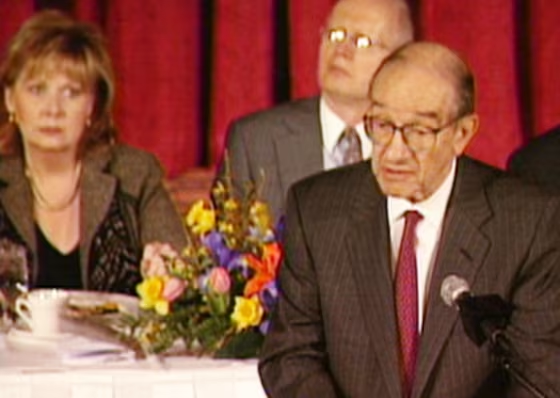
Federal Reserve Chairman Alan Greenspan said Tuesday a declining dollar will help curb America’s huge trade deficit but suggested it could happen sooner if Japan and China’s currency interventions were smaller.
“The currency depreciation that we have experienced of late should eventually help to contain our current account deficit as foreign producers export less to the United States,” the Fed chief told the Economic Club of New York.
Greenspan noted foreigners’ claims on the United States --represented by the U.S. current account imbalance -- have grown markedly and that it was hard to say when that will slow or even reverse, “but it is evident that the greater the degree of international flexibility, the less risk of a crisis.”

 FOR SUBSCRIBERSCBP leaders cut out of Trump ad buy decision









FOR SUBSCRIBERSA harrowing ordeal aboard an Israel-bound plane





He said the U.S. economy has demonstrated its increased flexibility by weathering a series of severe shocks since mid-2000 and posted only a small falloff in national economic output.
FOR SUBSCRIBERSCBP leaders cut out of Trump ad buy decision
FOR SUBSCRIBERSA harrowing ordeal aboard an Israel-bound plane
In a wide-ranging address, Greenspan said he did not believe heavy currency intervention by Asian countries, including Japan and China, was driving the value of the euro up against the dollar, notwithstanding European nations’ complaints that was happening and that it was threatening their economic recovery.
“But a more likely possibility is that Asian currency intervention has had little effect on other currencies and that the trade-weighted average of the dollar is, thus, somewhat elevated relative to the rate that would have prevailed without intervention,” Greenspan said, implying the dollar might have fallen more swiftly and thus slowed imports from Asia and elsewhere to U.S. markets.