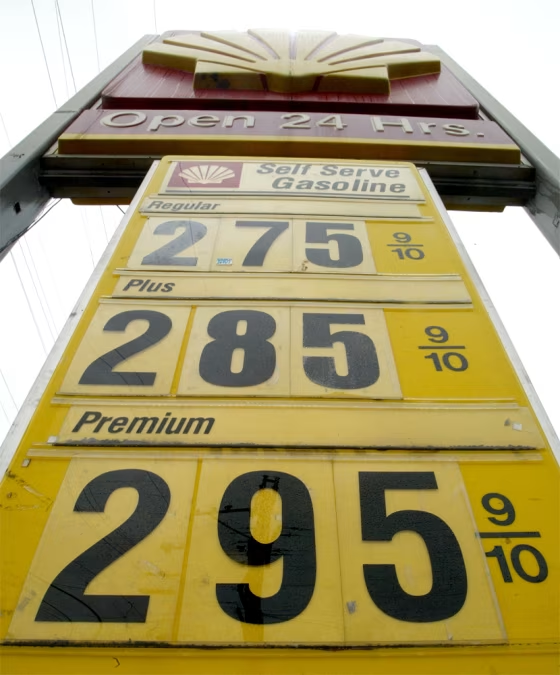
The Bush administration is “extremely concerned” about soaring retail gasoline prices, which recently topped $1.70 per gallon nationwide and are likely to set a record high this month, according to energy officials.
“This administration is extremely concerned,” U.S. Energy Secretary Spencer Abraham told reporters after testifying before a Senate appropriations subcommittee on the department's proposed budget for fiscal 2005.
Abraham did not say what, if anything, the administration was doing about rising gasoline prices.
At a separate Senate hearing on energy supply and demand, the head of the U.S. Energy Information Administration said there was a "good possibility" that retail gasoline prices will set a new high by the end of March.
The current national average price for unleaded gasoline is $1.72 per gallon, just 3 cents shy of the record set during late August, according to the EIA, which is the statistical arm of the Energy Department.
Tight global supplies of crude oil, a recovering U.S. economy and the looming summer driving season mean that gasoline prices are certain to climb higher during the next few weeks, according to EIA analysts.
The EIA has also warned that because U.S. gasoline inventories are below normal levels, any problems at a refinery or pipeline may cause supply disruptions and a resulting rise in price.
EIA Administrator Guy Caruso said that the recent rise in wholesale gasoline costs has yet to be fully passed through to motorists.
“While it is still too early with any certainty how high prices will go this year, many signs are pointing to a tight gasoline market this driving season,” Caruso told the Senate panel.
















Caruso rejected criticism from some lawmakers who say the administration should stop putting crude oil into the Strategic Petroleum Reserve and keep as much petroleum on the market as possible.
“Our view is it doesn't reduce oil supply. We believe the world oil supply has not been affected,” Caruso said. The amount of oil going into the crude oil stockpile was being offset by additional production from OPEC, he said.
During his appearance on Capitol Hill, Abraham did not discuss gasoline prices or OPEC crude oil production. He instead sought to justify the Energy Department's proposed $24.3 billion budget for fiscal 2005, which begins on Oct. 1.
Abraham reiterated Congress should pass a broad energy policy bill, now stalled in the U.S. Senate. The $16 billion bill would double the use of corn-distilled ethanol and offer incentives for oil and gas drilling.
“I think the question should be whether the Congress is prepared to go into the election season having once again — if it does — fail to pass an energy bill,” he said. "This administration has done everything we can."