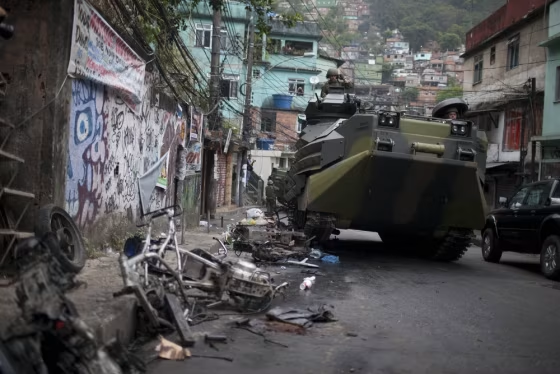
Hundreds of elite police units backed by armored military vehicles and helicopters marched into Rio's largest slum before dawn Sunday, the most ambitious operation yet to bring security to a seaside city long known for its violence.
The occupation of Rocinha, a notorious hillside "favela" that overlooks some of Rio's swankiest areas, is viewed by officials as a crucial part of the city's preparations to host soccer's World Cup in 2014 and the Olympics two years later.
Security forces have occupied 18 slums in the past three years but none of them quite as big or as strategically important as Rocinha, which is located along a choke point for traffic between the main city and western areas where most Olympic events will be held.
The soldiers and police encountered no resistance from drug gangsters in the dawn invasion of Rocinha and the nearby Vidigal favela. The invasion was as much a media event as a military operation as the authorities had announced their plans days in advance, giving gang members time to flee.
Hours into the operation, not a shot had been heard in Rocinha. Special police units worked their way up the steep, winding roads as black Huey helicopters pounded the air above, crisscrossing the hill and flying low. Residents peeked out of their windows, staring down at the police and journalists.
One resident applauded the move. "Tell the world we're not all drug traffickers! We're working people and now they're coming to liberate us," a man yelled as police rolled by.
Marisa Costa da Silva, 54, who runs a small candy shop at the base of the slum, was less sure. "Lord knows if there will be war or peace, or even if thing will be better if police take this slum," she said. "We've heard they've been abusive to slum residents in other places they've taken. I have no idea what to expect."
Armored personnel carriers in Vidigal were having trouble climbing the steep roads that drug gangs had apparently covered in oil, The Associated Press reported.
Years of fear
After years of living in fear of both gang members and the often-violent tactics of police, residents were wary of embracing the new reality.

 FOR SUBSCRIBERSCBP leaders cut out of Trump ad buy decision









FOR SUBSCRIBERSA harrowing ordeal aboard an Israel-bound plane





FOR SUBSCRIBERSCBP leaders cut out of Trump ad buy decision
FOR SUBSCRIBERSA harrowing ordeal aboard an Israel-bound plane
"I'm hopeful, but they have to do a lot more. The community needs health, education and other social services to follow this," said Wilson Aracanju, a 53-year-old evangelical pastor watching the events unfold from his church.
According to cable TV news channel GloboNews, only one person was detained during the operation. There were no reports of casualties during the occupation.
The sprawling hillside community, home to about 100,000 people and close to some of Rio's most exclusive areas and best beaches, is believed to be the main drug distribution point in Brazil's second-largest city.
In the authorities' "pacification" program for slums, police trained in community relations eventually take over the occupation and city officials step in to provide services such as health centers and proper electricity supply, bringing residents into the formal economy.
Officials say they intend to expand the program to all of the remaining major gang strongholds by 2014, when Rio will be a World Cup host city.
Most of the occupations have taken place in slums close to Rio's wealthier areas, leading to criticism that the program is aimed mostly at supporting the city's real-estate boom and preparing for the sports events. Huge slums in more distant areas are still controlled by gangs or militia groups made up of rogue off-duty police and firefighters.