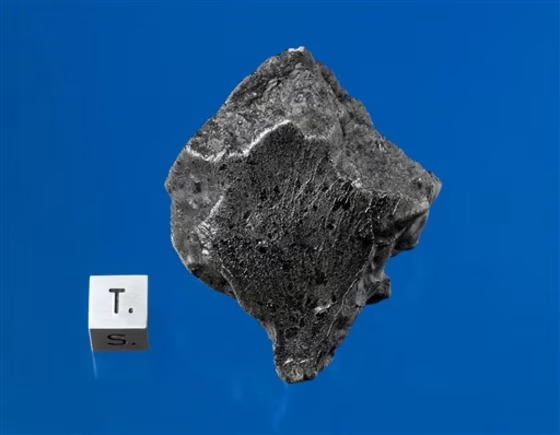
Scientists are confirming a recent and rare invasion from Mars: meteorite chunks from the Red Planet that fell in Morocco last July.
This is only the fifth time scientists have chemically confirmed Martian meteorites that people witnessed falling. The small rock refugees were seen in a fireball in the sky six months ago, but they weren't discovered on the ground in North Africa until the end of December.
Scientists and collectors of meteorites are ecstatic, and the rocks are already fetching big bucks because they are among the rarest things on Earth.
A special committee of meteorite experts, which includes some NASA scientists, confirmed the test results Tuesday. They certified that 15 pounds (7 kilograms) of meteorite recently collected came from Mars. The biggest rock weighs more than 2 pounds (a kilogram).
Astronomers think that millions of years ago something big smashed into Mars and sent rocks hurtling through the solar system. After a long journey through space, one of those rocks eventually landed here. It plunged into Earth's atmosphere, splitting into smaller pieces and one chunk shattered into shards when it hit the ground.
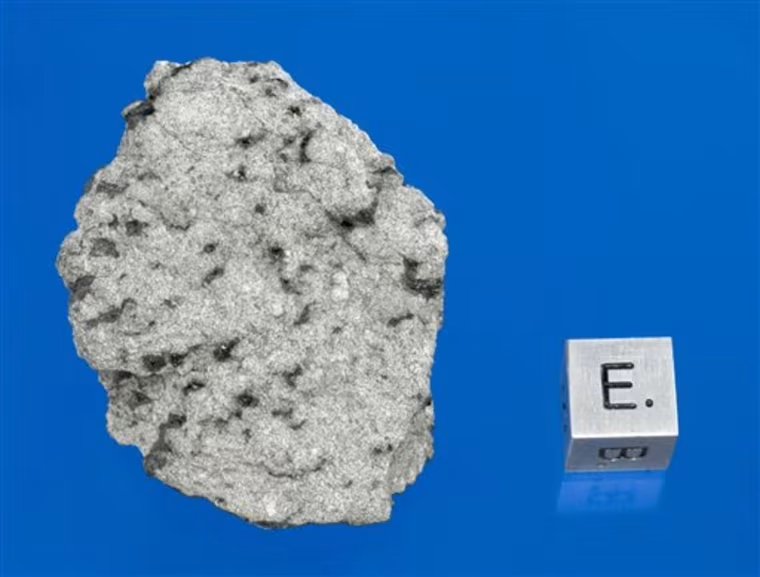
This is an important and unique hands-on look at Mars for scientists trying to learn about the planet's potential for life. So far, no NASA or Russian spacecraft have returned bits of Mars, so the only Martian samples scientists can examine are those that come here in a meteorite shower.
Most other samples had been on Earth for millions of years — or at the very least decades — which makes them tainted with Earth materials and life. These new rocks, while still likely contaminated because they have been on Earth for months, are still more pure and better to study.







 FOR SUBSCRIBERSA harrowing ordeal aboard an Israel-bound plane







FOR SUBSCRIBERSThe debate over AI’s future rages on both coasts

FOR SUBSCRIBERSA harrowing ordeal aboard an Israel-bound plane
FOR SUBSCRIBERSThe debate over AI’s future rages on both coasts
The last time a Martian meteorite fell and was found fresh was in 1962. All the Martian rocks on Earth add up to less than 240 pounds (110 kilograms).
The new samples were scooped up by dealers from those who found them. Even before the official certification, scientists at NASA, museums and universities scrambled to buy or trade these meteorites.
"It's a free sample from Mars, that's what these are, except you have to pay the dealers for it," said University of Alberta meteorite expert Chris Herd, who heads the committee that certified the discovery.
He's already bought a chunk of meteorite and said he was thrilled just to hold it, calling the rock "really spectacular."
One of the key decisions the scientists made Tuesday was to officially connect these rocks to the July fiery plunge witnessed by people and captured on video. The announcement and naming of these meteorites — called Tissint — came from the International Society for Meteoritics and Planetary Science, which is the official group of 950 scientists that confirms and names meteorites.
Meteorite dealer Darryl Pitt, who sold a chunk to Herd, said he charges from $11,000 to $22,500 an ounce and he's sold most of his already. At that price, the new Martian rock costs about 10 times more per ounce than gold.
Online: