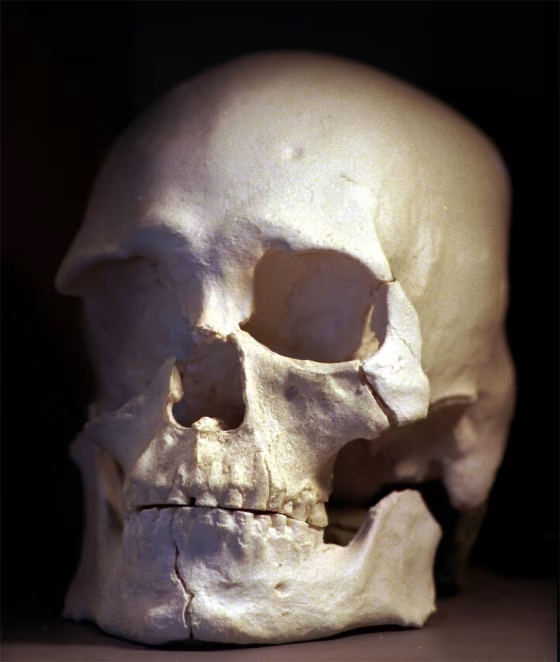
A federal appeals court declined Monday to reconsider its February decision allowing scientists to resume testing on a 9,000-year-old skeleton — called “Kennewick Man” — despite protests from American Indian tribes.

 FOR SUBSCRIBERSCBP leaders cut out of Trump ad buy decision









FOR SUBSCRIBERSA harrowing ordeal aboard an Israel-bound plane





The legal fight over the Kennewick Man skeleton started soon after two teenagers discovered it near the shore of the Columbia River near Kennewick, Wash., in 1996.
Scientists dated the remains as 8,340 to 9,200 years old, yet called the find puzzling because its features differed from those of American Indians. They hoped to continue testing to gain new insights into early North American people.
FOR SUBSCRIBERSCBP leaders cut out of Trump ad buy decision
FOR SUBSCRIBERSA harrowing ordeal aboard an Israel-bound plane
Indian tribes wanted the remains be buried, but in a ruling against the tribes and the federal government, which had sided with the Indians, a three-judge panel of the 9th Circuit Court of Appeals in San Francisco rejected the request in February.
On Monday, the court declined to ask an 11-judge panel to reconsider the February ruling.